 Русский
 English
 Español


MAVATO / Thailand
A property shortlist in Thailand
Leave your phone number. We will discuss your plans and prepare a personal shortlist.
 Sign in / Register
Original published Mavato text. Migrated on 07.11.2026; terms must be checked at the time of enquiry.
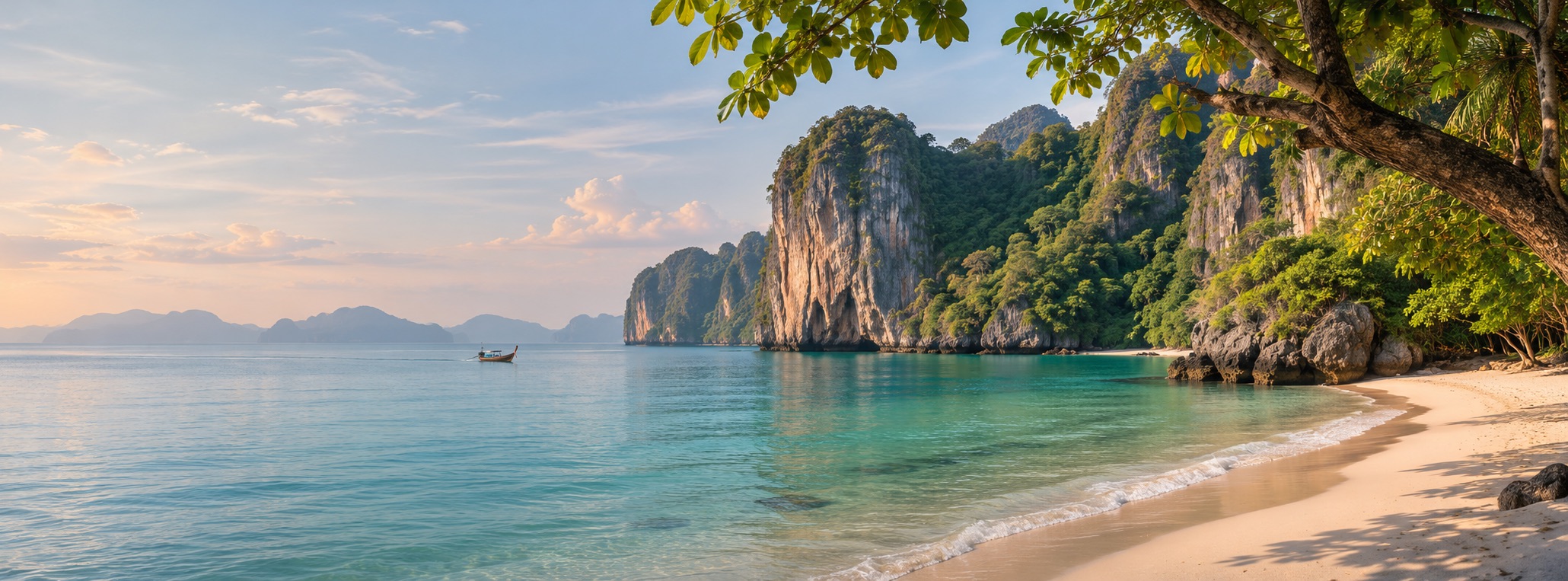
More than a place on the map.
From the first interest in the country,
before choosing a place to live.
Population, dynamics of economy and consumer prices. Indicators refer to specified years; these are statistics of a country or territory, not an estimate of property returns.
Analytics by directionA seasonal guide for the Bangkok area. Average monthly temperatures and precipitation from NASA POWER.
Average precipitation: 0.3…0.7 mm/day.
Average precipitation: 1.6…4.9 mm/day.
Average precipitation: 4.9…5.1 mm/day.
Average precipitation: 1.6…8.4 mm/day.
Ranges of average monthly values for 2001-2025 years: temperature takes into account day and night, precipitation is indicated in mm / day. This is a climate benchmark for a city area, not a forecast or an indicator for the whole country. Season names are conditional: these are calendar groups of months, not the boundaries of the dry or rainy season. The NASA POWER data is averaged over a cell around 0,5° × 0,625°; mountains, coasts and other areas may differ.
Several cultural and natural sites from the UNESCO World Heritage List. The links open the official description of each place.
Articles on the topicUNESCO World Heritage Centre / UNESCO DataHub · CC BY-SA 4.0 · Dataset
Leave your phone number. We will discuss your plans and prepare a personal shortlist.
For many Russians, People who moved to ThailandThe issue of education is relevant. If you have a small child, you need to think about kindergarten, older children will need to go to school, and teenagers will have to enter university. Consider the features of the local education system, how good it is and what you will have to deal with in principle.
Modern education in Thailand It is considered one of the best and most prestigious in the world – it is no worse than in Europe and America. Diplomas of many universities are of international standard, and therefore are quoted in various countries of the world. In addition, after graduating from higher education, the state helps diligent students to find work.
Nursery. They give babies up to 3 years.
Sadiq (pre-school education). They are used by children from 3-x to 6-th years.
School (secondary education). The school is enrolled in 6 for years and studied in it 12 for years.
Higher education.
All kindergartens and general educational institutions are divided into 2 type: public (free) and private (paid). But education in universities is only paid.
The nursery can be at schools, or it can be an independent institution. They have their own work schedule: from 8 in the morning to 15:00. Here children are fed, entertained and played with them in educational games. If you choose a nursery from an inexpensive price segment, you will have to pay 3-5 thousand baht per month. And immediately you need to pay about 7-10 thousand baht.
The schedule of kindergartens is almost the same as that of nurseries - from 8:00 to 15:30. In the kindergarten, the child is taught reading, counting, and writing skills. Great attention is paid to the English language, drawing, modeling and other types of fine arts. In addition, children are constantly tested and given homework.
The cost of attending a kindergarten depends on the language and system of training, as well as the prestige of the institution. So, if the primary language in the kindergarten is Thai, then you will have to pay an average of 20 thousand baht per year. And in institutions where the main language is English, the price will be much higher - up to 200 thousand baht. There are kindergartens where teachers talk to children in English, but the Thai system of education is practiced. In this case, the cost will be approximately 75 thousand baht.
Schools
In Thai schools, all conditions have been created for the full development of the child’s personality. 2 models of education are practiced here: Thai and British. In the first case the academic year consists of 2 semesters: from May to October and from November to March. In October, March and April, children have holidays. The British model assumes a 3 semester, and the holidays begin in the summer. In 13 years, children get the opportunity to independently choose the courses they want to attend. The most popular are mathematical and scientific directions.
Private schools offer a richer program. In particular, here you can learn Japanese or Chinese (in addition to mandatory English), and physical education classes to change to dance, choreography, tennis, football or martial arts. Students are also given the opportunity to participate in a variety of projects.
Many children spend the summer in summer camps. They are very different and adapted for children of different age groups. So, you can choose either an entertainment summer camp or a language summer school, where the child learns in the morning, and in the afternoon – relax and have fun.
In such camps there is necessarily an equipped beach, playgrounds, disco. In addition, under the supervision of staff, children can visit the zoo, water park, attractions. Each shift lasts from 10 to 14 days.
It's important.! For the child, it is necessary to obtain medical insurance.
There are over 80 state universities in Thailand and almost 70 private universities. The number of foreign students is limited: no more than 20 thousand people can enter universities annually. There are more than 400 (!) master’s programs, which are designed for international students. Teaching is conducted in English or Thai. Knowledge of English is mandatory.
Entrance exams can be taken by everyone who has a school diploma and speaks English. On the exam, you need to write an essay, and pass a test in mathematics.
The system of assessments is identical to the American model. Very strict rules about bribes – for such violations, a teacher can even be fired, and a student can be excluded (by the way, for cheating, too).
Pay attention! In Russia, some universities offer their students grants to study in Thailand.
The most popular faculties in this country are international business, business administration and marketing.
Every foreign student has a chance to enter a local university with a student visa and the opportunity to pay for tuition. In addition,
The cost of training on average ranges from 2-x to 4-x thousand dollars per year. It is much cheaper than in America or Europe.
There is one additional year of study to adapt Russian students, as well as to improve their English (or Thai) skills. Only from the second year begins the study of profile subjects.
The education system involves the use of the latest technologies and equipment. Therefore, all the audiences are well equipped technically.
Many teachers are specialists from the United States, Canada and Australia.
Students who do not have the opportunity to attend lectures can find all materials on the Internet - on a special website of their university.
The government is interested in good specialists, so it helps successful students with employment.
And, of course, Thailand has a wonderful climate, incredible beauty of nature, magical sea and unique culture. And also - a magnificent cuisine and a lot of interesting sights. Therefore, studying in this country will also be very pleasant.
Browse destinations and property listings in the Mavato catalogue.
View propertiesExplore properties for your budget and investment horizon. Discuss potential returns, costs and exit options.
Tell us about your question or plans.

After submitting the form, you will see confirmation that your request has been received.