 Русский
 English
 Español

MAVATO / Thailand
A property shortlist in Thailand
Leave your phone number. We will discuss your plans and prepare a personal shortlist.
 Sign in / Register
Original published Mavato text. Migrated on 07.11.2026; terms must be checked at the time of enquiry.
More than a place on the map.
From the first interest in the country,
before choosing a place to live.
Population, dynamics of economy and consumer prices. Indicators refer to specified years; these are statistics of a country or territory, not an estimate of property returns.
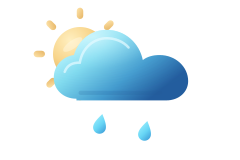
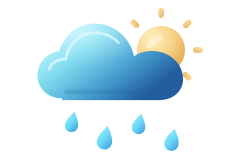
Analytics by directionA seasonal guide for the Bangkok area. Average monthly temperatures and precipitation from NASA POWER.
Average precipitation: 0.3…0.7 mm/day.
Average precipitation: 1.6…4.9 mm/day.
Average precipitation: 4.9…5.1 mm/day.
Average precipitation: 1.6…8.4 mm/day.
Ranges of average monthly values for 2001-2025 years: temperature takes into account day and night, precipitation is indicated in mm / day. This is a climate benchmark for a city area, not a forecast or an indicator for the whole country. Season names are conditional: these are calendar groups of months, not the boundaries of the dry or rainy season. The NASA POWER data is averaged over a cell around 0,5° × 0,625°; mountains, coasts and other areas may differ.
Several cultural and natural sites from the UNESCO World Heritage List. The links open the official description of each place.
Articles on the topicUNESCO World Heritage Centre / UNESCO DataHub · CC BY-SA 4.0 · Dataset
Leave your phone number. We will discuss your plans and prepare a personal shortlist.
Medical and medical tourism in Thailand in 2024 – what do you need to know if you want to get quality medical services from Thai doctors? Read our article.
The health system in Thailand It is considered one of the best in the world. In 2019, CEOWORLD conducted a study in which 89 countries took part. The level of medical care was assessed according to many criteria: professionalism of medical staff, state support, availability of good quality medicines, price of medical services. In addition, a number of general parameters were taken into account in the country, such as the environment, sanitation/penalties for unsanitary conditions, access to clean drinking water, tobacco smoking and sugar abuse.
The results were very interesting. In the TOP-10 countries were:
Taiwan.
South Korea.
Japan.
Thailand.
Austria.
Denmark.
Spain.
France.
Belgium.
Australia.
Thus, Thailand was on the 4 place in the world! And this is despite the fact that the state took seriously the health care not so long ago - in 2002. The most important innovation was the unified health care system. It provides the same sanitary standards and treatment conditions for all Thais.
Control over state medical institutions is carried out by the Ministry of Health. Private clinics are operated by the Medical Registration Unit, which is again controlled by the Ministry of Health.
In the central cities of the provinces, there are regional hospitals designed for 500 patients (500 beds). The medical staff includes specialists of all directions. In the largest cities of the provinces there are general hospitals on 200-500 people. At the district level, municipal hospitals of the following categories operate:
small, designed for 10-30 patients (polyclinics);
medium, on 60 person;
large, on 90-150 patients.
Public health facilities provide people with first aid. If further treatment is required, the patient is sent to a regional hospital or a general medical institution. This is due to the fact that such hospitals are better equipped and employ highly specialized doctors.
The local health care system includes 3 programs:
Full free medical care for civil servants and their families.
Service to private workers.
Universal Coverage insurance system, designed for the rest of the population.
There are more 1000 hospitals and clinics in Thailand, and over 9700 paramedics. The Ministry of Health pays most of the costs associated with the purchase of medical equipment, as well as the maintenance of state medical institutions.
The money for the expenses comes from the state insurance program Universal Coverage program – health insurance is 99.5% of Thais. In addition, health care works closely with government agencies such as the Health Foundation of Thailand, the Institute of Ambulance, the Healthcare Research Institute and the State Health Commission.
A huge role in the development of the health care system was played by the insurance program called 30 baht, held in 2001. It was designed for people with low incomes – the amount of insurance for them was only 30 baht. The population could receive medical care not only in any hospitals and clinics attached to their site, but also in those located on other sites. Almost all the expenses were paid by the state. In 2006, the program of compulsory health insurance for the poor became free.
There are hundreds of private clinics in Thailand. Some of them work on all 3 programs, as well as state programs. However, most of these hospitals provide paid services, as well as medical care for those who have an insurance policy (which allows you to cover the costs).
There are also international private clinics. One of them is considered the largest in the Asian region. The first hospital in Asia received the international ISO9001 certificate (very high quality of services), as well as the accreditation of the International Joint Commission.
Among Thais, temple medicine is very popular. It is practiced by Buddhist monks living at temples. The principles of treatment are based on phytotherapy - the healing properties of plants. People are treated with infusions, ointments, decoctions, balms, extracts from leaves, stems, roots, fruits, seeds, flowers. Herbal saunas and herbal baths, as well as compresses, are actively used. Actions are aimed at eliminating the cause of the disease, and only then - its symptoms. The results of this treatment give and very good.
But only 100 years ago (the beginning of the 20 century) monks were forbidden to treat people because their methods were declared quackery by the government. Despite this, they continued to help people. In 1961, the new government changed the situation, and vice versa – it began to encourage traditional medicine. It was even included in the economic development plan. And in 1993, the Institute of Thai Folk Medicine was founded, which then joined the Ministry of Health.
1996 has established the Foundation for the Development of Thai Folk Medicine. Now the Foundation conducts numerous studies of the medicinal properties of various plants and develops effective herbal remedies that help against a variety of ailments. He works closely with the Institute of People’s Medicine.
That's interesting! The best universities in Thailand teach subjects related to folk medicine and its methods of healing.
In 2000, the tourism sector in Thailand began to work in another direction - "medical tourism". It is designed for people who want to undergo certain medical procedures. The services of dentists, plastic surgeons, surgeons are in great demand - the level of professional training of such specialists and the medical equipment of the offices are at the world level.
At the same time, the price of services is much lower than in America and Europe. Here people go to Thailand to get high-quality medical care and save a large amount. And rest, too. The number of such tourists is growing from year to year, as the government of Thailand is actively developing this area.
Browse destinations and property listings in the Mavato catalogue.
View propertiesExplore properties for your budget and investment horizon. Discuss potential returns, costs and exit options.
Tell us about your question or plans.

After submitting the form, you will see confirmation that your request has been received.