 Русский
 English
 Español



MAVATO / Thailand
A property shortlist in Thailand
Leave your phone number. We will discuss your plans and prepare a personal shortlist.
 Sign in / Register
Original published Mavato text. Migrated on 07.11.2026; terms must be checked at the time of enquiry.
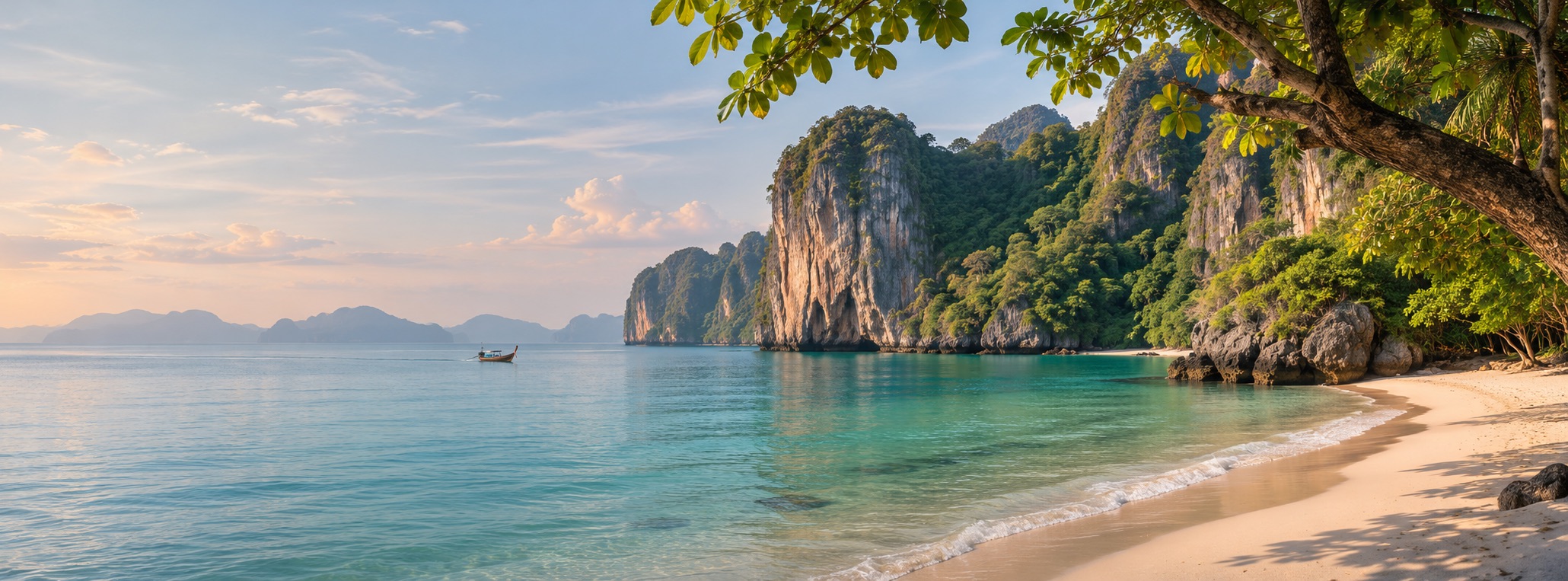
More than a place on the map.
From the first interest in the country,
before choosing a place to live.
Population, dynamics of economy and consumer prices. Indicators refer to specified years; these are statistics of a country or territory, not an estimate of property returns.
Analytics by directionA seasonal guide for the Bangkok area. Average monthly temperatures and precipitation from NASA POWER.
Average precipitation: 0.3…0.7 mm/day.
Average precipitation: 1.6…4.9 mm/day.
Average precipitation: 4.9…5.1 mm/day.
Average precipitation: 1.6…8.4 mm/day.
Ranges of average monthly values for 2001-2025 years: temperature takes into account day and night, precipitation is indicated in mm / day. This is a climate benchmark for a city area, not a forecast or an indicator for the whole country. Season names are conditional: these are calendar groups of months, not the boundaries of the dry or rainy season. The NASA POWER data is averaged over a cell around 0,5° × 0,625°; mountains, coasts and other areas may differ.
Several cultural and natural sites from the UNESCO World Heritage List. The links open the official description of each place.
Articles on the topicUNESCO World Heritage Centre / UNESCO DataHub · CC BY-SA 4.0 · Dataset
Leave your phone number. We will discuss your plans and prepare a personal shortlist.
Eat in Thailand They do. Foreigners who come here often face a real culinary shock, as the variety and specificity of local food is very different from the usual European cuisine. In most cases, it is very tasty – this is noted by all immigrants. Conventionally, Thai food can be divided into street food, the one served in cafes and restaurants and homemade. It also has its own culture at the table. All these points we will consider – they are useful for those who are going to stay in Thailand for a long time or even move here for permanent residence.
Such food is often no worse than cooked at home, and the price is almost no different. Therefore, local residents often buy “breakfasts”, “lunches” and “dinners” from street food vendors. It is sold from trays or makashnitsa (kind of kitchens on wheels, which are transported by bicycle or bike).
The peculiarity of this type of Thai food is that it is prepared in front of the buyer. Thais don't store ready food. If it is not eaten on the day of cooking, it is thrown away. Therefore, beware of buying already cooked hot dishes - they may be stale.
The exception is food from metal trays. Very often it is sold on food courts (restaurant courtyards) in shopping centers. These are ready-made dishes that you can combine to your liking. The seller gives you a plate of rice, which neatly adds everything you like from the range offered.
Choose trays and makashnitsa, near which there is a queue of local residents. This means that the seller is reliable, cooks tasty and quality.
Do not buy dishes from raw seafood – often they are simply covered with boiling water. You risk catching an intestinal infection, parasites, or even just poison yourself.
Keep in mind that many Thai dishes contain ingredients that are unusual for intestinal disorder. For example, it can be tamarind, papaya, fresh ginger, turmeric, coconut. By the way, especially "different" in this regard is popular with local salad "Soma Tam" with papaya. Therefore, in advance find information on the Internet about fruits that have a laxative effect. Or just don’t go far from home at first.
If you do not like something (the appearance of products, the smell, you doubt the freshness of the offered dish) – do not hesitate to ask the seller to change the food for a better quality. Thais are not shy. Therefore, they often look boring because of this, but they have almost no problems with digestion.
The food you buy can be eaten immediately - in this case, you will be given appliances. A plate, fork or spoon can and should be wiped with a wet napkin! The locals do this all the time. If you want to take food with you - it will be placed in a plastic bag, and in a separate package will give sauce. By the way, eating right on the street in Thailand is considered the norm - so do absolutely everything.
There are a lot of them here, starting with inexpensive local cafes and ending with respectable establishments for wealthy people. The menu is diverse: it has first and second dishes, snacks, all sorts of sauces, desserts (there are few of them), as well as soft and alcoholic beverages (usually beer). Keep in mind that you will also have to pay for water here. Only in the cheapest cafes it is given for free, and even then in small cups.
If you come to the establishment of the company - the order is made one for all. At the same time, the menu is actively (and for a long time) discussed by all participants of the feast. The opinion of the waiter is also interested.
In Thailand, it is customary for the waiter to stand next to the table until the order is formed. This is done in order to help with the choice of dishes.
Thais usually eat with spoons and forks, but knives are not served on the table. If the dish involves cutting it into pieces first, it is done in the kitchen. Chopsticks are also rarely eaten.
Ordered dishes are placed on the table in common plates. Then each takes a portion of food on his plate with a serving spoon or his clean (!) spoon.
According to the rules of etiquette, you should not simultaneously add more 1-2 spoons of 2-3-x other dishes to rice. First you need to eat them, and then try new combinations.
It is very ugly for the Thais with whom you are sitting at the same table to leave a lot of uneaten food on your plate. He was counting on all of them.
It is also not customary to ask for a dish that is far away from you. But you can stand up to reach out to him. Sometimes in the middle of the meal, common dishes are changed places.
It is impolite to ask a Thai to try something specific is compulsion. Here, a person chooses what he wants to eat.
Another feature of local cafes and restaurants is that you may not be served something ordered. This is not done on purpose, but because there are a lot of dishes and ready-made food is immediately taken to the table. The cook may simply forget what he has already cooked and what he has not yet cooked.
If you don't have a dish, just remind the waiter. Or, do not forget, if you have to pay for it, then you will have to pay for it, and then you will have to check it. Say you didn't get this dish and it'll be deducted from the bill. But to argue and argue is definitely not worth it.
As mentioned above, street food and food in inexpensive cafes and restaurants in principle is no different from dishes cooked at home. And at about the same price. Whether to cook or not, everyone decides for themselves.
In Thailand, everyone eats with a lot of spices and chili peppers. Even if you order food without spices (so say - "without spices") - it will still be spicy. Not as much as in the original. Fortunately, over time, the body gets used to spicy food - this is noted by all immigrants. In addition, pepper, ginger, turmeric and onions perfectly kill pathogenic bacteria in the intestines, which significantly reduces the risk of catching an intestinal infection.
To tip for street food is to offend a person. Giving a tip to the waiter is to show that you appreciated his efforts. But if the account is already included in the service, then you can not give anything. One of the guarantees that you have a decent street food seller or an honest establishment - fixed prices on price tags or on the menu.
Browse destinations and property listings in the Mavato catalogue.
View propertiesExplore properties for your budget and investment horizon. Discuss potential returns, costs and exit options.
Tell us about your question or plans.

After submitting the form, you will see confirmation that your request has been received.