 Русский
 English
 Español



MAVATO / Thailand
A property shortlist in Thailand
Leave your phone number. We will discuss your plans and prepare a personal shortlist.
 Sign in / Register
Original published Mavato text. Migrated on 07.11.2026; terms must be checked at the time of enquiry.
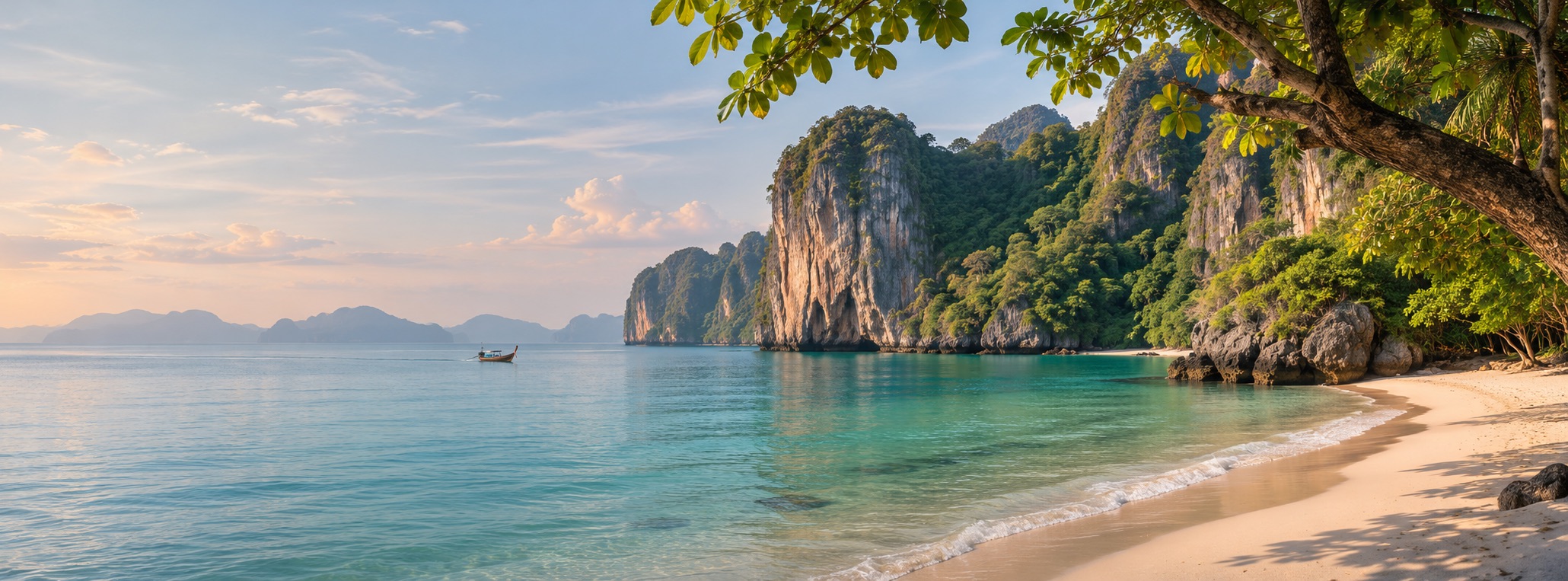
More than a place on the map.
From the first interest in the country,
before choosing a place to live.
Population, dynamics of economy and consumer prices. Indicators refer to specified years; these are statistics of a country or territory, not an estimate of property returns.
Analytics by directionA seasonal guide for the Bangkok area. Average monthly temperatures and precipitation from NASA POWER.
Average precipitation: 0.3…0.7 mm/day.
Average precipitation: 1.6…4.9 mm/day.
Average precipitation: 4.9…5.1 mm/day.
Average precipitation: 1.6…8.4 mm/day.
Ranges of average monthly values for 2001-2025 years: temperature takes into account day and night, precipitation is indicated in mm / day. This is a climate benchmark for a city area, not a forecast or an indicator for the whole country. Season names are conditional: these are calendar groups of months, not the boundaries of the dry or rainy season. The NASA POWER data is averaged over a cell around 0,5° × 0,625°; mountains, coasts and other areas may differ.
Several cultural and natural sites from the UNESCO World Heritage List. The links open the official description of each place.
Articles on the topicUNESCO World Heritage Centre / UNESCO DataHub · CC BY-SA 4.0 · Dataset
Leave your phone number. We will discuss your plans and prepare a personal shortlist.
It has been more than a century since Thailand's first railway line - just 50 miles - was built, connecting Bangkok and the former royal capital of Ayuthaya. Since then, itineraries have been extended to much of the country, and while train travel has almost completely replaced buses and planes, scenic rail routes and sleeper trains remain one of the best ways to see the country's identity and authenticity.
Even the Thai government sees the potential of the railways once again. There is talk of high-speed rail lines, and construction of Bangkok’s shiny new Bang Sue Grand station, (presumably) Southeast Asia’s largest railway hub, is almost complete.
Thailand's rolling stock is not as developed at the moment, but trains operated by the State Railway of Thailand (SRT) tend to go on time, comfortable and charmingly cozy inside, which is highly predictable.
If you’re not in a hurry, want to slow down and relax, the trains are very good for you, because they are very spacious, there is a lot of legroom (especially in sleeping cars); great Thai food (in the restaurant car or at sellers selling snacks between stations); chic views; antique stations; and unusual experiences. Here are the top six train routes in Thailand.
Start to Tonburi; The end is Samut Songkram; Distance - 50 miles / 80 km
One of the best train trips in the world Thailand - it's a short weekday commuter line. It starts near Bangkok and ends right in the middle of a water market.
Start at Tonburi Wongwian Yai Train Station, across the Chao Phraya River from BangkokFrom where hourly trains depart to Samut Sakhon (known by locals as Mahachai). From the window you can see houses, temples and shops built at arm’s length from passing trains. Further along the route grow palm trees, patchwork-style rice fields and swamps filled with giant perennial plants and canna lilies.
The farms disappear when you enter Samut Sakhon. After disembarking and strolling through one of the busiest fresh produce markets in the country, you’ll find yourself in a harbour clogged with water hyacinths and wooden fishing boats.
Take the ferry to Baan Laem, where you can and should take another train, this time to Samut Songkram. You'll get right into the hustle and bustle of the bustling market stalls. Between the arrival and departure of trains, these kiosks are installed directly on the tracks and need to be removed urgently and quickly before the train arrives. This is a very unusual and stunning sight.
Start to Tonburi; The end is Nam Tok; Distance - 258 miles / 415 km
Built during the Japanese occupation of Thailand during World War II, the so-called Death Railway is Thailand's most famous and historic railway line. Construction began in October of the 1942 by prisoners of war and mobilized workers armed with only basic tools and dynamite. More 12 000 prisoners of war and up to 90 000 hired and forced labourers died due to illness, poor hygiene, lack of medical equipment and ill-treatment by camp guards. The deadliest section of the railway construction was a huge stone logging, dubbed the "Hellfire Pass" because of the eerie glow of torches when working at night.
Given the rugged territory it passes through, it is undoubtedly the most scenic train route in Thailand. The 688 bridges were built along the route; the bridge over the Kwai River near the town of Kanchanaburi (now called the Death Railway Bridge) was at that time the only steel bridge built in Thailand.
Trains that run on the Death Railroad are third class, meaning they have no air conditioning and mostly wooden benches (take on the left side for a better view). Today it is a tourist line, so there are stops for short visits to historical sights and caves.
Start to Bangkok; The end is Chiang Mai; Distance - 467 miles / 751 km
Thailand's first long-distance rail route, which links Bangkok and the northern city of Chiang Mai, is a classic Thai train route.
This route is a great opportunity to try one of the sleeping trains in Thailand. They depart from Bangkok in the afternoon, which means that most of the way passes at night. In the morning you will wake up and see beautiful views of the northern Thai countryside. In particular, watch closely as the train travels through tunnels and the mysterious forest of Doi Khun Tan National Park, south of Chiang Mai (another fascinating sight is to watch train staff lay out beds for sleep, tucking in bed linen for you, a trifle, but nice).
If you're buying a more expensive ticket, you're more likely to ride one of the shiny new SRT trains. Similarly, buy tickets as early as possible; it is this route that is very popular with tourists.
Start to Bangkok; The end is Hua Hin; Distance - 131 miles / 212 km
This route skirts the Gulf of Thailand, and while sea views are rare, the provinces of Phetchaburi and Prachuapkhirikhan have several beautiful scenery, including salt marshes and seemingly endless coconut plantations. Your destination, Hua HinThis is the original beach corner of Thailand, whose history dates back to the 19 century.
The highlight of the route is the Hua Hin railway station. Perhaps the most beautiful train station in Thailand, this red and white station was built in 1926 in the year in Victorian style with gingerbread, decorated with many carved wooden columns and finishes. As Hua Hing owes its prosperity to the train, the station is a source of pride and you will find replicas of its design throughout the city.
Start to Bangkok; The end is Tanaleng; Distance - 402 miles / 648 km
Depart from Bangkok in the afternoon, this illustrious international route crosses the Mekong River into Laos and is a great opportunity to try out Thai night trains with a bed. In the morning, as the warm sun shines on your bed, you will drive past tiny villages and seemingly endless rice paddies, representing in all its glory the rural northeast of Thailand.
After a stop in Nongkhai, you will cross the so-called Friendship Bridge in Laos. 15-minute trip will take you to Thanaleng station (also known as Dongphasay), which means you will need to take a taxi or tuk-tuk the remaining 10 miles to the country's capital, Vientiane. This is a very convenient option if you need a visa.
A high-speed train that will link the two destinations is under construction, but delays in construction mean its completion has been postponed to 2030 for a year.
Start to Bangkok; The end is Singapore; Distance - 1100 miles / 1800 km
Are you missing the menu of the SRT restaurant car? Then consider taking the ultra-luxury Eastern & Oriental Express, a private train that links Bangkok and Singapore. Equipped to remind passengers of the golden era of train travel, the three-day journey will feature luxury private compartments, although you will also have the opportunity to spend most of your time in observation cars, restaurants and bars.
All-inclusive travel, and in addition to trains, activities include tours and excursions in Thailand and Malaysia. E&O runs between Bangkok and Singapore twice a month.
You can buy train tickets online through the clunky SRT website, but if you're in Bangkok, it's much more efficient to head straight to Hualamphong Station and buy tickets in person.
Avoid speculators in and around the train station who will try to redirect you to travel agencies.
Browse destinations and property listings in the Mavato catalogue.
View propertiesExplore properties for your budget and investment horizon. Discuss potential returns, costs and exit options.
Tell us about your question or plans.

After submitting the form, you will see confirmation that your request has been received.