 Русский
 English
 Español


MAVATO / Spain
A property shortlist in Spain
Leave your phone number. We will discuss your plans and prepare a personal shortlist.
 Sign in / Register
Original published Mavato text. Migrated on 07.11.2026; terms must be checked at the time of enquiry.
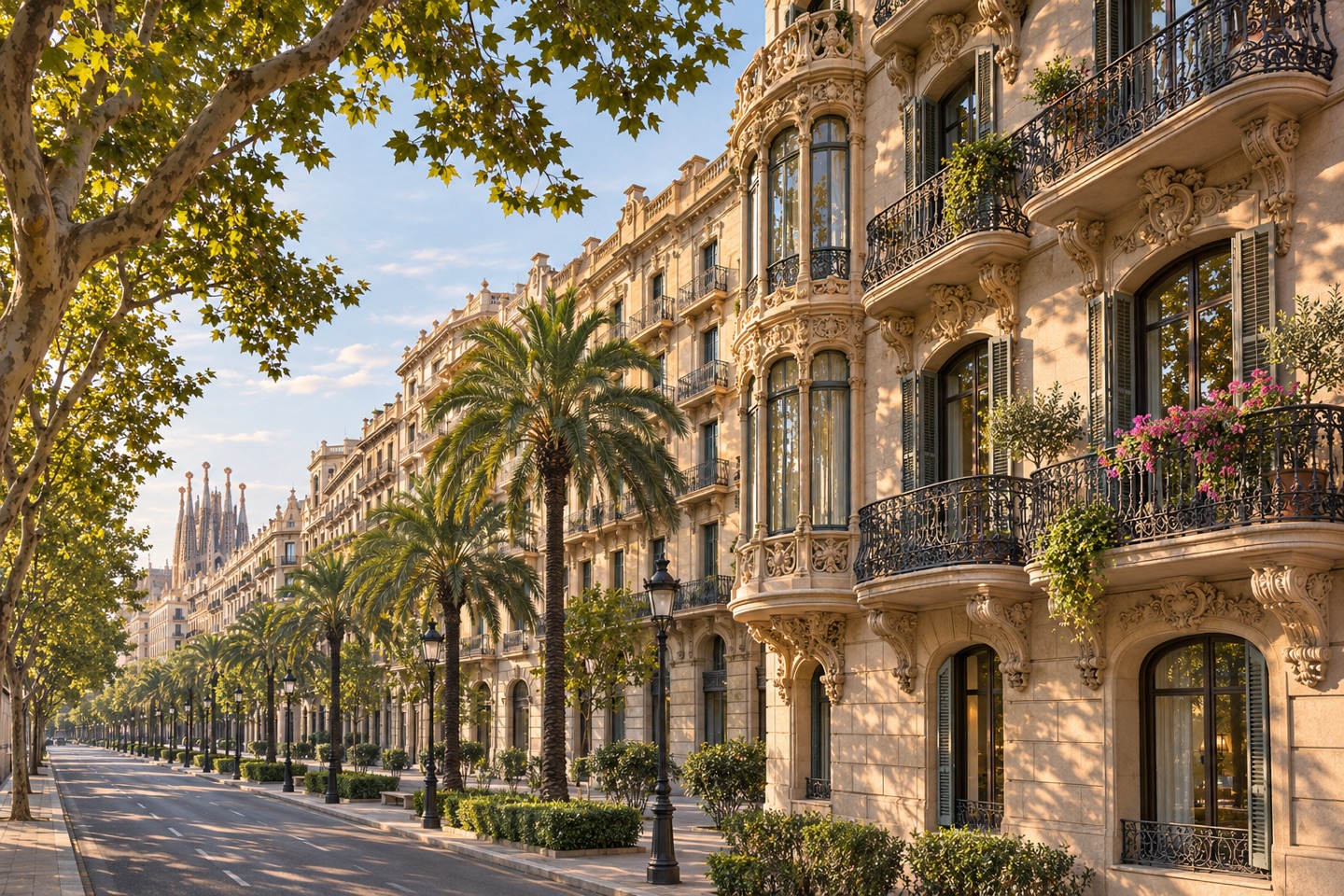
More than a place on the map.
From the first interest in the country,
before choosing a place to live.
Population, dynamics of economy and consumer prices. Indicators refer to specified years; these are statistics of a country or territory, not an estimate of property returns.
Analytics by directionA seasonal guide for the Madrid area. Average monthly temperatures and precipitation from NASA POWER.
Average precipitation: 1.2…1.4 mm/day.
Average precipitation: 1.4…1.7 mm/day.
Average precipitation: 0.3…0.7 mm/day.
Average precipitation: 0.8…2.1 mm/day.
Ranges of average monthly values for 2001-2025 years: temperature takes into account day and night, precipitation is indicated in mm / day. This is a climate benchmark for a city area, not a forecast or an indicator for the whole country. The NASA POWER data is averaged over a cell around 0,5° × 0,625°; mountains, coasts and other areas may differ.
Several cultural and natural sites from the UNESCO World Heritage List. The links open the official description of each place.
Articles on the topicUNESCO World Heritage Centre / UNESCO DataHub · CC BY-SA 4.0 · Dataset
Leave your phone number. We will discuss your plans and prepare a personal shortlist.
Spain is a European country washed by the Mediterranean Sea, the Bay of Biscay and the North Atlantic Ocean. The country is the fourth largest in Europe and the second largest in the European Union, occupying a total area of 505 990 km2 with a population of 46 507 760 people.
Spain joined the EU in 1986, which led to a rapid modernization of its economy. Spain's gross domestic product (GDP) at 2022 for the year was nominally 1,314 trillion dollars. The climate of the country is clear and hot in the interior, with overcast weather on the coast.
Spain's main natural resources include iron ore, coal, copper, lignite, lead, uranium, tungsten, zinc, magnesite, fluorespar, mercury, pyrite, gypsum, kaolin, potassium, sepiolite, hydropower and arable land.
The main environmental problems facing Spain are:
Deforestation. Spain’s vast forests have been destroyed over the years due to unplanned logging, wildfires and inefficient farming practices. Government attempts to implement reforestation schemes failed until 2020
Air pollution. Acid rain, depletion of the ozone layer and the greenhouse effect are all consequences of the air pollution problem Spain faces. Industrial CO2 emissions totalled 223.2 million tonnes in 1995, placing Spain 20th worldwide for emissions. However, the situation has changed considerably over the past 10 years, and Spain’s environmental conditions are now much better than Russia’s.
Quality and quantity of water throughout the country. Industrial and agricultural waste exacerbated Spain's water pollution problem, as did oil tankers plying to the country's shores. The Mediterranean Sea is polluted due to the discharge of sewage and untreated wastewater from offshore oil and gas production.
Desertification - 36% of the country's territory is threatened by desertification, with the Canary Islands and the southeast suffering the most. Although some of this degradation is due to climate change, natural processes, loss of soil fertility of irrigated lands due to salinization, erosion of livestock grazing, fires and human irresponsibility. Sahrawi dust flies off the west coast of Africa and over the Canary Islands (Spanish archipelago).
The strengthened legislative and institutional environmental framework at the regional and national levels on the basis of EU directives and new laws fights and overcomes environmental problems in the country over the past years 5 very successfully following measures:
Improving the quality of coastal waters for bathing and municipal water infrastructure
More emphasis is placed on biodiversity and conservation in terms of Natura 2000 proposals, protected area management, national biodiversity conservation strategy, and improved international cooperation.
Renewed climate change policy commitments under EU and Kyoto commitments
Recent revision of water management policies in line with the EU Water Framework Directive.
In 2008, clean energy use in Spain accounted for less than 8% of total energy supply, which is far from the target for 2022 in 22.7% envisaged by the National Renewable Energy Action Plan for 2011-2022. To curb the high dependence of energy on oil imports, the government has developed an Energy Efficiency and Energy Saving Action Plan for the 2008–2012, aimed at encouraging the use of fluorescent lamps. It also offered financial incentives to promote eco-friendly and innovative vehicles and expanded support for electric vehicles in line with the Comprehensive National Strategy for the Promotion of Electric Vehicles.
The National Air Quality and Atmospheric Protection Plan at 2013-2016 has established a framework for improving air quality through concrete actions taken in coordination with other industry plans. Within the framework of the second Kyoto Protocol period (2013-2020), several programs were developed for sectors other than ETS. Various sector-specific plans have been developed to help reduce greenhouse gas emissions in hotels and other tourist destinations by improving energy efficiency.
In addition, the government has approved the National River Recovery Strategy and the National Integrated Solid Waste Management Plan and has been successfully implementing it since 2008. The Spanish monitoring plan was created to assess the effectiveness of measures taken to reduce POPs, and human biological biomonitoring (HBM) is not the gold standard in assessing the impact of pollutants on humans.
Spain holds high positions in the driving forces of innovation characteristic of clean technologies and commercial innovation in clean technologies. However, it has low scores on new innovations in clean technologies. Experts believe that while Spain’s public policy is focused on clean technologies, the country needs additional public spending on R&D and access to private financing. The poor assessment of clean technology innovation stems from a lack of environmental patents and venture capital investments. By the way, this is a great idea for startups, if you are an expat, think about this idea.
According to the World Bank’s Little Green Data Book, the average annual percentage of deforestation in Spain was -1.9% in the period from 1990 to 2007, and 3.7% of all energy is produced from biomass and waste. About 61.8% and 9.2% of all electricity produced in the country is generated from fossil fuels and hydropower, respectively. In addition, all of Spain has access to improved sources of water and sewerage, and now occupies a leading position in this area.
Globally, Spain currently ranks 12 in the environmental performance index with 78,39. It ranked first in water and sanitation and received high marks in areas such as air quality and environmental hygiene. In the field of climate and energy, he scored 67,77 points and took the 23 place. This performance index tracks a number of objectives, such as ecosystem viability and environmental health.
Each of these goals includes policy categories such as ecosystem impacts and climate change. They are further subdivided into several key environmental indicators that can be directly measured, such as child mortality and indoor air pollution.
The OECD Environmental Indicators report praises a number of Spain's environmental measures. However, the report also highlights the need for the country to improve the effectiveness of this environmental policy and integrate environmental concerns into industries such as tourism, transport, energy, construction and agriculture.
OECD invites Spain to move towards a sustainable future by:
Separation of energy consumption and waste generation from economic growth in relevant sectors
Adaptation of the international environmental agenda
Changes in the environmental tax
Ratification of the Aarhus Convention
Better fisheries management
Preventing marine pollution from oil spills and land-based pollution
Analysis of the harmful effects of taxes and subsidies and conducting strategic environmental assessments in the transport, tourism, energy, agriculture and construction sectors.
Sustainable tourism and a large influx of emigrants in Spain is one of the most important drivers of the country's development. A way of traveling and living that respects and cares about nature, places and local communities is always more in demand not only in the Iberian Peninsula, but also around the world. Spain has many authentic and beautiful rural areas where ecotourism offers a real opportunity for social and economic development. Some of the most interesting areas include Asturias and the Pyrenees, Catalonia (between the Costa Brava and the hinterland), Andalusia, and the Canary and Balearic Islands. Are you ready to discover 10 eco-friendly destinations in Spain, ideal for a holiday in harmony with nature and moving with family? From the north to the south of the country, here you will find the most beautiful places with the most environmentally friendly indicators in Spain.
The list of the best eco-friendly destinations in Spain begins with one of the most famous cities in the north of the country, in the Basque Country: San Sebastian. A beautiful place with rich nature, art and history.
To breathe in its culture, you can explore the center’s delightful streets, watching the buildings, the City Hall, the Deputation and Miramar palaces, as well as the squares of Kostituscion and Gipuzcoa. And then museums, Victoria Theatre and churches. The most characteristic of these is the Neo-Gothic-style Buen Pastor Cathedral, built in 1897 in the year.
For hiking, some trails lead to Mount Urgull, where Mota Castle stands out. There are four of these paths, and they all start at different points, each with different surprises and views that cannot be missed.
Just two kilometers from the center rises Donostia. From here you can organize hikes to Mount Igueldo, which can be reached on foot or by cable car, which still has the original 1912 wagons of the year. old lighthouse.
Between the two mountains is Concha Beach, the symbol of the city, one of the most beautiful city beaches in the world. Wide and sandy bay, which still has a wild part, and in its center is the rocky island of Santa Clara.
And of course, in this place very clean air, water and ecology are maintained at a high level.
Whether you want to spend the rest of your life or just another vacation in the middle of wild and unpolluted nature, the ideal eco-friendly destination is Noja on the coast of Cantabria in Spain.
There are many authentic routes that cross the beaches, dunes, swamps, countryside and forest, where you can immerse yourself in the green idyll of nature and admire the incredible scenery. The Santogna, Victoria and Joyel Lagoon Nature Park is a heritage home to 120 of various waterfowl species, birds and many more different animal species.
Among the most famous beaches are Playa de Tregandin and Playa de Ries with their majestic cliffs and luxurious flora. They are ideal for any water sport.
And then you can visit and choose in the central area, with architectural masterpieces, elegant palaces and historic residences, sanctuaries and churches. The symbol of the city is the Roman bridge crossing the wide lagoon of Las Huelgueras. Noha is also part of the Santiago Way.
Along the coast of "Green Spain", on the shores of the Cantabrian Sea, in Asturias there is a lively Gijon. This sustainable destination in Spain was a finalist in the European Commission’s EDEN (European Destination of ExcelleNce) programme for sustainable tourism. Many foreigners buy atm property precisely because of the fact that the place is very environmentally friendly.
A natural and cultural destination that can be explored from the coast to the interior; rich in museums, squares, palaces and Roman ruins, and you can't help but notice the Clock Tower. There is also a cape and the fishing area of Simadeville, with a large park that extends into the ocean and offers incredible views.
In this region there are many paths, green areas, attractions for families, parks, lakes, mountains and places for walking along the sea. The most famous beach is Playa de San Lorenzo, long and sandy, with separate points with cliffs and coves.
There is a primate in the Catalan capital. It was the first city in the world to receive an eco-friendly tourism certificate in Spain.
In one of the most famous tourist destinations on the planet, the ambassador of eco-friendly tourism, you can live absolutely carefree and happy, without thinking about health. This place is preferred by people with asthma and other respiratory problems. You can enjoy the Mediterranean sunshine, entertainment and local liveliness in numerous green spaces, with a variety of landscapes with unique styles.
You can get around by bicycle, thanks to the numerous bike paths, or on foot, you are offered a center with magnificent palaces, historical monuments, squares, art alleys, architecture of Gaudí and Rambla will accompany you to the harbor. You can also visit various parks, the hills of Tibidabo and Montjuïc and numerous belvedere. Don’t forget to stroll along the city coast to the most crystal-clear shores of the Costa Brava.
Choosing accommodation in Catalonia, among history and nature, we can talk about Girona, a small green and architectural gem.
Once the city was surrounded by medieval walls, now it is formed by a maze of ancient streets. here you can find the Cathedral of Santa Maria, museums and colorful houses that appear on the banks of the Onyar River. Don’t miss the monastery of Sant Pere de Galligans, churches and ancient Roman thermal baths. You can also walk along an archaeological trail that will take you to the most important sites of the ancient city.
Among the natural parks it is impossible not to mention the parks near the river Ter: La Deveza and Le Ribes del Terre, ideal for walking or playing sports. If you want to get around by bike, follow the Green Roads and walk the ancient railway tracks on two wheels.
Another ideal destination for eco-friendly emigration in Spain is the bustling yet clean Valencia.
A dynamic city, rich in culture and traditions, ancient and modern at the same time steadily developing. Thanks to the dense network of bike paths connecting the city, and excellent bicycle rental service, you can move well everywhere without your own transport and breathe clean air.
You can cross the whole city along the old riverbed of the Turia River, which is now a flowering garden long 9 kilometers, connecting the Park de Cabecera with the City of Arts and Sciences. A pleasant bike ride can take you to interesting museums, monuments and rivers hidden inside.
You can’t miss the nice beaches with the clear sea, among the most famous are Playa La Malvarrosa and Playa de Las Arenas.
To bring your feet to tone and always have the opportunity to enjoy the beautiful view, you can climb the Miguelete Tower, attached to the Gothic cathedral. Climb the 207 steps of the spiral staircase, reach the terrace of the bell tower and marvel at the impressive views of the city and the county. And perhaps someone will find their place of power there, an ideal place to work for remote workers with creative professions.
In addition, a few kilometers from the city center is the magical natural park of Albufera. Inside you can find the largest lagoon of the whole country, an ancient sweet and salty lagoon, born from the confluence of the Turia and Hukar rivers with the sea. It is also a shelter for unique species of waterfowl and birds.
Doñana National Park
Now we move south, between the provinces of Huelva, Cadiz and Seville, in Andalusia, in the picturesque Doñana National Park. This is one of the most beautiful and important areas of Europe, inscribed on the UNESCO World Heritage List.
A wonderful place where you can find various ecosystems: swamps, lagoons, kilometers of beaches, moving dunes, rocks, pine forests and Mediterranean thickets. Different animals coexist here, such as birds, deer and wild boars. Some species are even threatened with extinction, such as the Imperial Spanish eagle or the Iberian lynx. There are a total of 500 species of plants and animals of great ecological value.
An exciting scenario that changes every season and will constantly amaze you, in the territory stretching on 543 square kilometer, and which can give you a green journey full of emotions.
Thanks to its western landscape, Almeria, located in the heart of Andalusia, offers the opportunity to go on an unearthly adventure and experience it day in and day out if you suddenly decide to move to this region.
The city is of Arab origin, with a rich historical past and untouched wildlife that gives stunning views. Among the ochre cliffs and deserted streets, you can watch typical rustic houses (cortijos) and enjoy the restorative tranquility. You can visit the center with its cobbled streets, coast, churches, museum and cathedral. And Alcazaba Almeria, a magnificent fortress located on a hill where you can admire the terrain and views of the city at 360 degrees.
The beaches are also paradises, especially the beach of Cabo de Gata. A nature reserve with unpolluted beaches, cliffs overlooking the clear sea and deep bays. This is very similar to the lunar atmosphere.
In addition, there is the Sierra Nevada National Park with its unique landscapes and endless possibilities. In winter and summer, you can devote yourself to sports: skiing, cycling, hiking and even horse riding.
Finally, just a half-hour drive from the city, you can visit the Tabernas Desert, the only one in Europe chosen by director Sergio Leone, where he shot his most famous films. You can also enjoy the numerous hiking trails in the midst of an incredible variety of flora and fauna. In addition, at night you can admire the unforgettable starry sky.
Not only a mecca of entertainment, but also a safe and environmentally friendly island, ideal for immigrating to Spain. In fact, Formentera, with its vast natural spaces, has unpolluted places that are perfect for living and numerous adventures.
For many years, the Consell Insular de Formentera has been actively promoting the island as one of the best eco-friendly destinations in Spain through numerous actions to protect its natural heritage.
The pearl of the Balearic Islands will take you on a journey that will reveal all your senses. Among the scenery of rare beauty, colorful villages and snow-white endless beaches with crystal clear and blue waters, you can engage in many activities. You can walk, cycle or horseback on the 32 green routes and practice all kinds of water sports.
Also, you can’t miss the route of the lighthouses and hills of the island, from the highlands of La Mola to the Cap de Barbaria.
El Hierro is a small island located west of the Canary Islands. With paradise beaches, rich greenery, volcanoes and a favorable climate, as well as many natural attractions, this land of “huge influence” is so called by its locals.
In addition, the island is distinguished by its protection of the local ecosystem. Declared a biosphere reserve, it is a place where there are many hiking trails surrounded by a variety of green and lush forests. The waters are crystal clear, and the picturesque bottom of the ocean is full of life. La Restinga Marine Reserve is an underwater temple known internationally and inhabited by numerous animals.
The island has long adopted a sustainable development model based on recycling, clean transport, organic agriculture and projects involving the use of solar energy and hydrogen cars. It was the first island to be fully self-sufficient thanks to the use of renewable energy.
Breathe in the clean air, enjoy the belvedere by the sea and immerse yourself in the meditative peace that unpolluted nature can inspire.
In conclusion, ecology is one of the new pillars of Spanish tourism. We have offered you some of the most beautiful and sustainable destinations in Spain to travel or move to a permanent residence, discover exceptional destinations and have a unique and rewarding experience.
Browse destinations and property listings in the Mavato catalogue.
View propertiesExplore properties for your budget and investment horizon. Discuss potential returns, costs and exit options.
Tell us about your question or plans.

After submitting the form, you will see confirmation that your request has been received.