
 Русский
 English
 Español
Buying a home in the Netherlands: checking flood exposure and the building
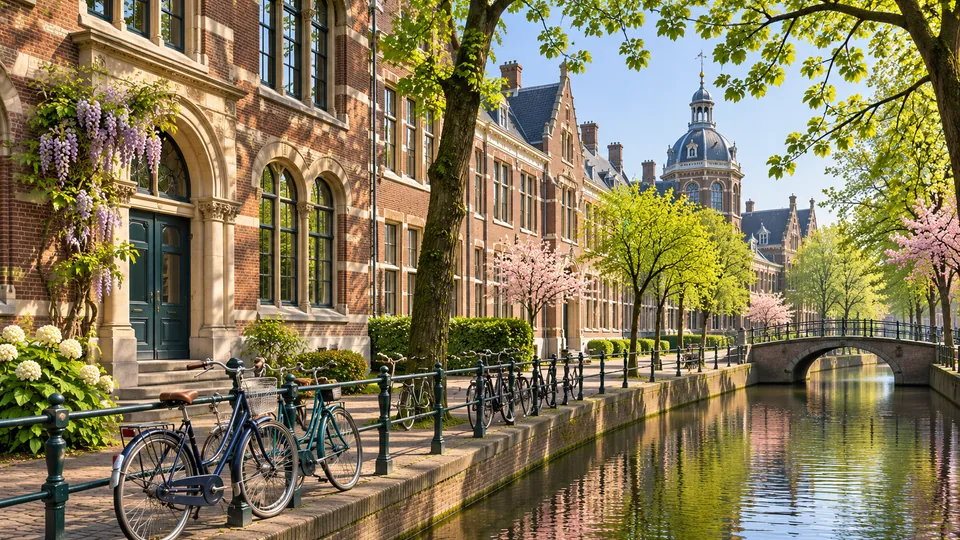
A canal beside a home may offer an appealing view, but water-related questions when buying in the Netherlands go beyond scenery. Consider major area flooding, the building’s condition and implications for everyday access separately. The official Overstroom ik tool is a useful starting point. Its results help formulate further questions; they are not a technical survey of an individual apartment.
Netherlands
More than a place on the map.
From the first interest in the country,
before choosing a place to live.
Population and economy
Population, dynamics of economy and consumer prices. Indicators refer to specified years; these are statistics of a country or territory, not an estimate of property returns.
Analytics by directionSources
- World Bank: Population (2025) 2026-11-09
- World Bank: Growth in Real GDP (2025) 2026-11-09
- World Bank: Inflation (2025) 2026-11-09
- World Bank: GDP per capita (2025) 2026-11-09
Climate · Amsterdam
A seasonal guide for the Amsterdam area. Average monthly temperatures and precipitation from NASA POWER.

Winter
December to February ≈ +3…+5 °C Cool · moderate rainfallAverage precipitation: 2.3…2.6 mm/day.
Spring
March-May ≈ +6…+13 °C Cool · moderate rainfallAverage precipitation: 1.3…1.9 mm/day.

Summer
June-August ≈ +16…+18 °C Warm · moderate rainfallAverage precipitation: 2.1…2.9 mm/day.
Autumn
September to November ≈ +8…+15 °C Cool · moderate rainfallAverage precipitation: 2.3…2.5 mm/day.
Ranges of average monthly values for 2001-2025 years: temperature takes into account day and night, precipitation is indicated in mm / day. This is a climate benchmark for a city area, not a forecast or an indicator for the whole country. The NASA POWER data is averaged over a cell around 0,5° × 0,625°; mountains, coasts and other areas may differ.
Sources
Places and heritage
Several cultural and natural sites from the UNESCO World Heritage List. The links open the official description of each place.
Articles on the topicSources
- UNESCO: Seventeenth-Century Canal Ring Area of Amsterdam inside the Singelgracht 2026-11-09
- UNESCO: Mill Network at Kinderdijk-Elshout 2026-11-09
- UNESCO: Eisinga Planetarium in Franeker 2026-11-09
UNESCO World Heritage Centre / UNESCO DataHub · CC BY-SA 4.0 · Dataset
A property shortlist in the Netherlands
Leave your phone number. We will discuss your plans and prepare a personal shortlist.
A canal beside a home may offer an appealing view, but water-related questions when buying in the Netherlands go beyond scenery. Consider major area flooding, the building’s condition and implications for everyday access separately. The official Overstroom ik tool is a useful starting point. Its results help formulate further questions; they are not a technical survey of an individual apartment.[1]
What the map shows and what it does not promise
Overstroom ik indicates possible water depth under flooding scenarios for the selected location. Its explanations note that elevation relative to NAP is only one factor; terrain, roads and defences also matter. Simply subtracting a site elevation from sea level would not produce a basement forecast. Check the correct location and understand the scenario displayed.[3]
The map has spatial limitations: the methodology describes 100-by-100-metre calculation cells using average ground level. The illustrated house is not a drawing of your building. The service also does not cover every case of heavy-rain runoff, sewer overload or high groundwater. A reassuring result from one tool therefore cannot resolve all questions about moisture or damage.[2]
Check the location, then the property
Start with the building’s exact address. Save the check date, address used and result so the surveyor can see what you examined. If a new neighbourhood produces no result, missing data does not mean missing risk. Confirm the location and seek clarification from the relevant local authorities, leaving the question unresolved until information is available.
Inspect more than the living rooms. Where accessible, include the basement, storage, entrance, courtyard, garage and shared equipment locations. Fresh paint or a damp smell does not by itself establish a cause. Ask a professional to assess observations and explain which additional investigations are appropriate for this particular building.
An upper-floor apartment still relies on shared systems
A high floor does not remove questions about building access, lifts, electricity and belongings stored below. This is not a forecast of failures, but a list of dependencies to discuss. For a family with a pushchair or someone with reduced mobility, entrance access may matter more than the apartment’s height. Consider daily arrangements if particular common areas temporarily become inaccessible.
For an apartment, request relevant VvE records on previous damage, proposed works, funding and common-area condition. Do not judge the entire building from one seller’s answer. Where repairs were planned, establish whether they were approved and completed, and what obligations remain. Compare documented work with the surveyor’s actual observations.
Insurance: obtain an answer for the specific scenario
Do not assume “home insurance” covers every form of water damage. Before buying, ask the insurer to explain the proposed policy’s building and contents cover, event types, exclusions, excess and required precautions. For an apartment, clarify the division between the building’s collective policy and personal cover. Keep the written explanation; general reassurance is not a substitute for policy terms.
If two insurers give different answers, check first whether both were given the same property details and event description. A burst pipe and widespread flooding may fall under different terms. Do not transfer assumptions from your current home to a future purchase without confirmation. An unclear answer is a task to resolve, not a reason to silently budget zero.
Turning the checks into a purchase decision
Separate confirmed facts, unresolved questions and potential expenses in the final table. A record of an old leak should be accompanied by its cause, repair details and whether it recurred; the date alone settles nothing. Obtain quotations for necessary work if identified. Compare the apartment with alternatives using consistent requirements, including reserves, practicality and your tolerance for uncertainty.
This guide concerns purchase preparation, not emergency instructions. Overstroom ik itself explains that it does not provide live information during a flood. For an ongoing event, follow the responsible local authorities. For an informed housing choice, obtain documents and address-specific answers in advance rather than deciding from the impression created by a nationwide map.[3]
Explore property in the Netherlands
VvE records and maintenance reserves before buying
Sources and periods of data
- Overstroom ik — address checker Accessed: 2026-11-18
- Overstroom ik — map methods and limitations Accessed: 2026-11-18
- Overstroom ik — English explanations Accessed: 2026-11-18
