
 Русский
 English
 Español
Japanese apartment layouts: what 1K, 1DK and 1LDK mean
A listing’s layout code describes how space is arranged, but not everything about size or comfort. Turn an unfamiliar floor plan into a useful housing comparison.

Japan
More than a place on the map.
From the first interest in the country,
before choosing a place to live.
Climate · Tokyo
Seasonal reference for the Tokyo area. Monthly mean temperatures and precipitation from NASA POWER.

Winter
December to February ≈ +5…+7 °C Cool · moderate rainfallAverage precipitation: 2.6…2.7 mm/day.

Spring
March-May ≈ +9…+18 °C Warm · high rainfallAverage precipitation: 4.0…4.8 mm/day.

Summer
June-August ≈ +22…+27 °C Hot · high rainfallAverage precipitation: 4.3…6.2 mm/day.
Autumn
September to November ≈ +13…+24 °C Warm · high rainfallAverage precipitation: 4.0…7.9 mm/day.
Ranges of average monthly values for 2001-2025 years: temperature takes into account day and night, precipitation is indicated in mm / day. This is a climate benchmark for a city area, not a forecast or an indicator for the whole country. The NASA POWER data is averaged over a cell around 0,5° × 0,625°; mountains, coasts and other areas may differ.
Sources
- NASA POWER: Tokyo, climate data for 2001–2025 · checked 2026-11-18
- World Bank Country API: coordinates for Tokyo 2026-11-09
- NASA POWER: sources and resolution of climate data · checked 2026-11-18
A property shortlist in Japan
Leave your phone number. We will discuss your plans and prepare a personal shortlist.
A common mistake when searching for a home before moving to Japan is to interpret the number in a listing through familiar conventions and ignore the letters. Two people can then discuss different layouts while using the same term. Treat the code as a first screening tool, then check dimensions, movement through the apartment and living conditions that no layout label can fully explain.
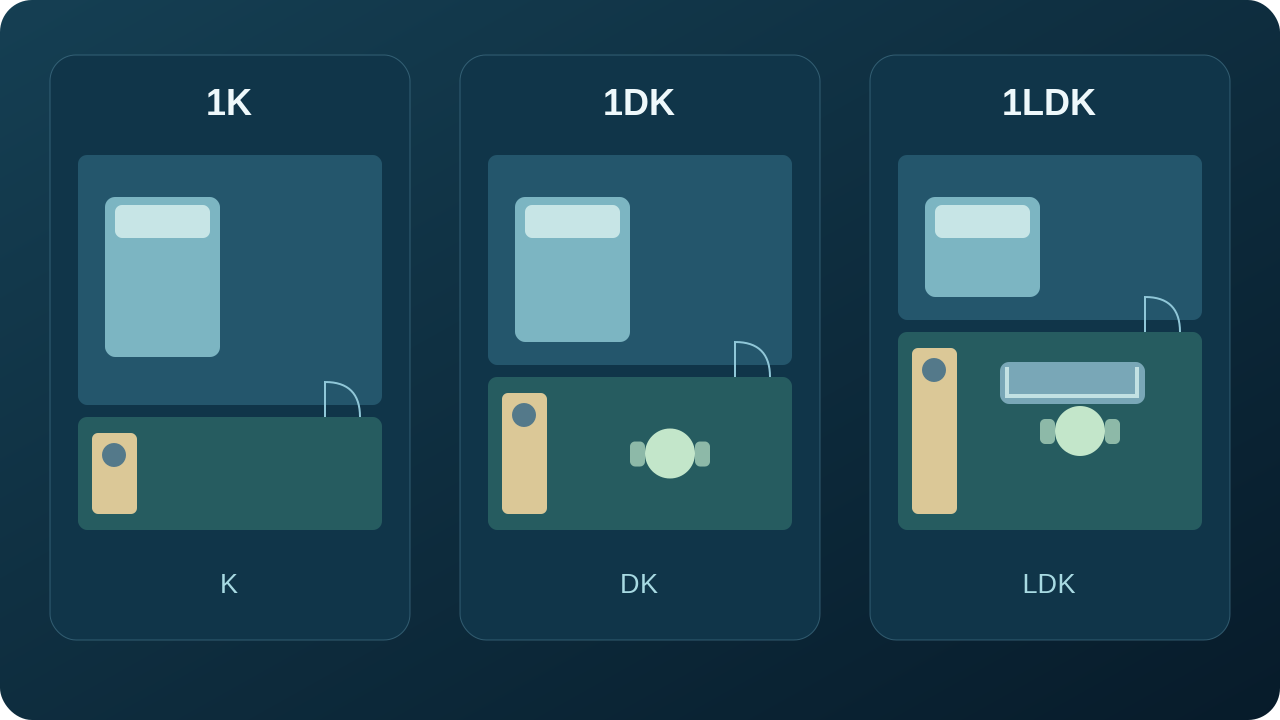
Letters describe functions; the number counts separate rooms
MLIT uses K for kitchen, D for dining and L for living. DK and LDK combine those functions in one area. The number counts additional separate rooms, not floor area.[1]
| Layout code | How to read the arrangement |
|---|---|
| 1K | 1 room + K |
| 1DK | 1 room + DK |
| 1LDK | 1 room + LDK |
| 2LDK | 2 rooms + LDK |
Do not automatically assign every separate room as a bedroom. You may need one for work, storage or children’s activities. Discuss which activities must happen simultaneously: sleeping, video calls, cooking or entertaining. These scenarios reveal whether one enclosed room is enough and whether a door is needed between a workspace and the shared living area.
Compare dimensions, not only the letters
Two apartments with the same code may accommodate your furniture differently. Request a dimensioned plan and clarify alcoves, built-in storage and passageways. If measurements are unavailable, put them on the viewing checklist. Do not reconstruct every distance from photographs: wide-angle lenses and camera positions make visual impressions unreliable measuring tools.
Make a list of items to measure: bed, desk, dining furniture, refrigerator, washing machine and luggage storage. Allow for doors opening and ordinary movement. An item may fit against a wall yet obstruct a cupboard or the normal walking route. Check this before furniture delivery or equipment orders, while changing the plan is still straightforward.
Check cooking, storage and workspace
Someone who cooks regularly needs preparation space, storage and workable distances between appliances. A home worker needs desk lighting, sockets and somewhere to speak without disturbing another resident. No layout is best for everyone. Compare which daily tasks each option handles well and which require a compromise.
During a viewing, walk mentally through a normal weekday from arrival to bedtime. Where will shoes, coats, shopping, laundry and cleaning equipment go? Couples can rehearse the route together. Conflicts between an open door, a chair and a passage become obvious when you imagine actual activities rather than empty rooms.
Confirm what the specific apartment includes
Attractive staging does not mean furniture and appliances are included. Request an inventory and check it during the viewing. If you see a show apartment, ask for a separate list of differences from your unit. Written confirmation supports the moving budget and prevents duplicate purchases or arriving without something essential.
Ask separately where your own appliances can be installed and which changes need consent. A convenient plan does not itself permit alterations or every use of the space. For a rental, check intended occupants, pets and work arrangements against the contract. Resolve anything essential to your lifestyle before reducing the comparison to price and move-in date.
Separate move-in costs from monthly rent
Japan’s consumer affairs centre distinguishes the shikikin deposit from non-refundable reikin, or key money. Other payments may also be due at move-in. Request an itemised quotation for the actual apartment instead of treating monthly rent as the whole moving cost. Check which charges apply and their amounts in the specific terms.[2]
Use three columns: cash needed before collecting keys, recurring payments and future contract-related costs. Do not deduct a possible future deposit refund from money required now. Record each payment’s due date and basis. Lower monthly rent will then no longer hide a larger initial cash requirement, and different terms can be compared without inventing a universal rule.
Keep a final comparison record
For each option, record its layout code, critical measurements, included equipment, confirmed charges and remaining questions. Add the actual commute, not just the nearest station. After several viewings, impressions merge; a consistent record preserves verifiable differences and helps explain to your adviser why one home suits you better.
If you are considering buying after renting, use that experience to refine your long-term housing requirements. Record which layout features help or hinder daily life. This is more useful than an abstract wish for more rooms. You can then discuss the city, budget and property options in Japan with a clearer understanding of the space your household actually needs.
Discuss a property search in Japan to match your future housing needs.
Sources and periods of data
- MLIT — Apartment Search Guidebook, reading floor layouts Accessed: 2026-11-18
- National Consumer Affairs Center of Japan — moving into rental housing Source date: 2026-02 · Accessed: 2026-11-18

