
 Русский
 English
 Español
How to Find Property Permits Before You Buy
Learn where to find permit records, how to compare approved plans with the property and which questions to resolve before committing to a purchase.
A villa can have a compelling view, a convincing rental history and an attractive price while its paperwork describes a smaller or differently used building. An enclosed terrace, pool or guesthouse deserves the same attention as the main house. The useful question is whether the property you can see, and the use you intend, match the available approvals.
To find property permits before you buy, identify the exact property, obtain the relevant authority’s records and have them compared with the building on site. This guide helps you organise that work with an independent local property lawyer and a suitably qualified architect, engineer or surveyor. Document names and procedures vary by location.
1. Identify the property before searching
Start a property file with the full address, apartment or unit number, parcel reference and land or property registry identifier, where available. Add previous addresses and any former plot numbers supplied by the seller. A development’s marketing name may not be the name used in official records.
Confirm which municipality and which planning or building authority have jurisdiction. An apartment may also require records for the whole building, common areas and later alterations within the unit. Keep the seller’s floor plan and listing photographs as a description of what is being offered, clearly separate from approved drawings.
2. Separate the different approvals
“The property has a permit” is too broad to settle a purchase decision. Ask your advisers to identify which categories apply locally:
- Planning and land use: whether the development or a particular use is permitted, including relevant conditions.
- Building work: the technical approval, permit or notification route for construction, extensions, structural alterations or demolition.
- Completion and occupation: inspections, completion records and any document required for the building to be occupied or used.
Not every jurisdiction uses all three categories, and some work follows an exemption or notification procedure. Establish the applicable route rather than demanding a document that does not exist locally. A lodged application is not necessarily an approval; an approved project is not evidence that all work was completed and signed off.
Keep the title review separate. Registration of ownership does not, by itself, establish that every addition or current use has the necessary permissions. Equally, a construction approval does not prove the seller owns everything being offered.
3. Request the seller’s document pack
Ask for the original approvals and later amendments, approved plans, inspection or completion records, relevant occupancy documents and correspondence about outstanding conditions. Include documents for the pool, outbuildings and converted spaces. Request a brief chronology of significant works, identifying who commissioned them and approximately when.
For each file, record the issuing authority, reference number, property identifier, date and status. Ask for complete documents with annexes, not just a cover page or a photograph of a stamp. Your lawyer can establish whether consent or an authority to act is needed to obtain further records.
4. Search the authority’s records independently
Begin at the municipality’s official website and follow its planning, building control or licensing links. Search by address and parcel identifier, then by application numbers from the seller’s documents. Review amendments and later cases as well as the original permission. Save the result, its source and the date checked.
Where available, obtain the decision, approved drawings, attached conditions and subsequent inspection or closure information. Ask what statuses such as “approved”, “completed” or “closed” mean in that system. A closed administrative file does not always answer every question about a building.
A blank online search is inconclusive. Confirm the portal’s coverage, try historic identifiers and ask the responsible office about archived files. Record exactly what could not be located and which authority or professional will resolve the gap.
5. Compare the plans with the property on site
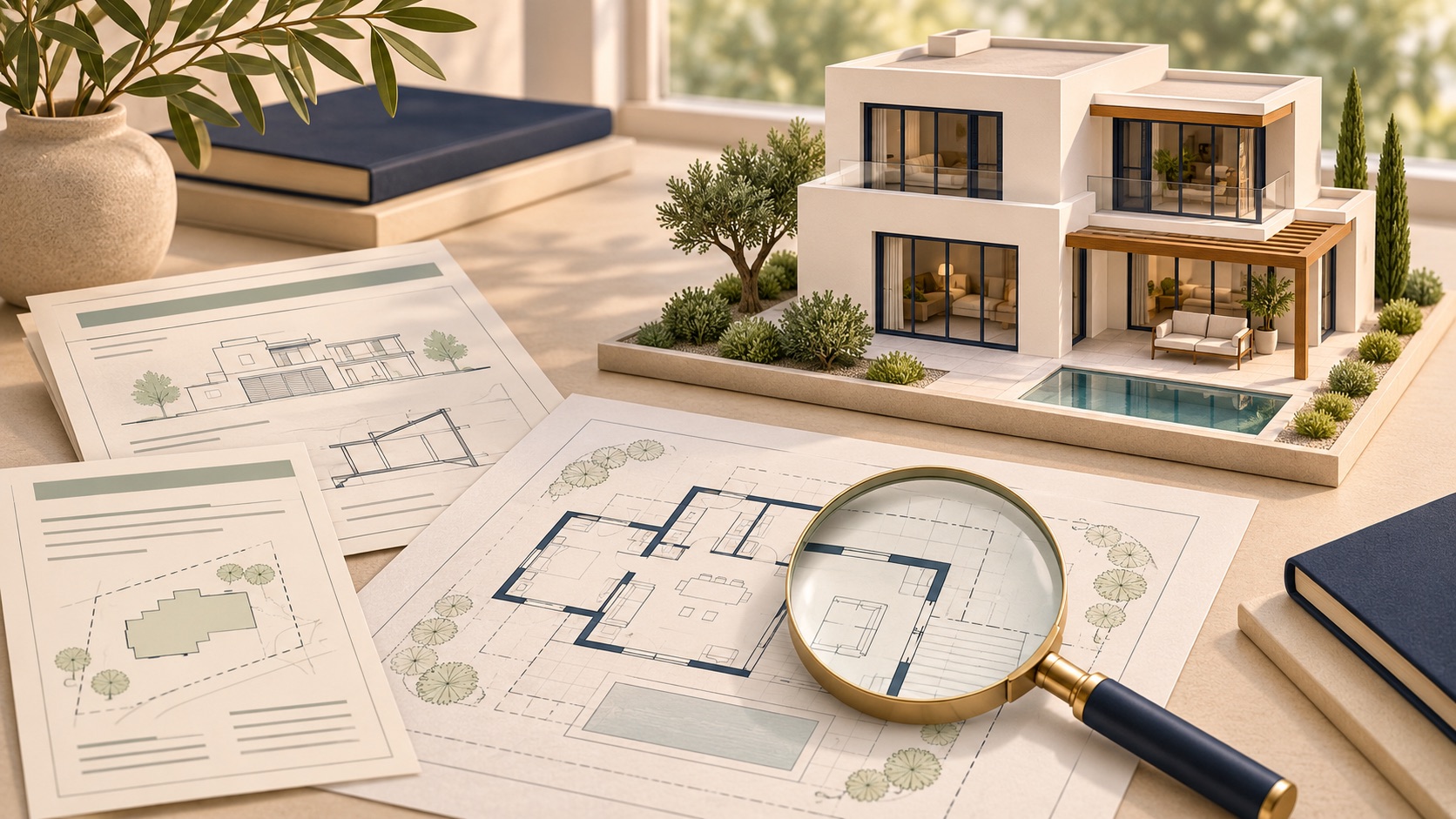
Give the approved drawings and your intended use to the professional carrying out the technical inspection. Ask them to compare the building’s footprint, floors, layout and uses with the records, distinguishing visible observations from matters that require further investigation.
A simple comparison sheet makes the review easier:
- Bedrooms and units: does the three-bedroom listing match the approved configuration, or does a later alteration explain the difference?
- Added space: are enclosed terraces, converted garages, basements and roof extensions accounted for?
- Outdoor structures: do the pool, guesthouse, retaining walls or other significant works appear in the relevant records?
- Access and shared areas: are the entrances, routes and spaces being sold consistent with the documents?
A discrepancy is a question to investigate, not an automatic verdict. Ask the professional to identify its significance and the evidence needed to explain it. A cosmetic change and a separate dwelling created inside a house may require very different reviews.
6. Check your intended use explicitly
Describe your plans in writing: a main home, occasional holiday use, long-term letting, short stays, a home business or more than one household. Ask which approvals and restrictions apply to that specific use, including any relevant building or community rules.
Permission for a residence should not be treated as proof that tourist accommodation, commercial activity or subdivision is allowed. Past bookings or rental income are useful commercial information, but do not resolve the permissions question. Keep any separate rental or business licensing review alongside the property file.
7. Three examples of official starting points
England: planning and building control
Use GOV.UK’s planning register finder to reach the council’s records. Check building control separately: the government’s building regulations guide explains that this approval is distinct from planning permission. Identify the relevant authority or building control body for the particular project.[1] [2]
New York City: building history and occupancy
The Department of Buildings’ building data page links to BIS and DOB NOW, which cover different sets of records. Its occupancy guidance explains the legal-use document and exceptions for some older buildings. Have an adviser establish the appropriate evidence for the property’s age and alteration history.[3] [4]
Spain: registry records and municipal files
The Registradores’ explanation of a nota simple concerns registered ownership, rights and charges. For municipal records, Madrid offers CONEX, with document availability varying by file and an archive request route. This is a Madrid example: ask the relevant municipality elsewhere in Spain which service and documents apply.[5] [6]
8. Resolve uncertainty before committing
Give your lawyer a written list of missing records and mismatches. Ask them to distinguish an archive gap, an applicable exemption, an unfinished approval process and a potential breach. The answer depends on local law, the date and nature of the work, and the evidence available.
Where further approval or corrective work may be needed, obtain a local assessment of feasibility, scope and responsibility. Do not price a proposed regularisation as though it were guaranteed. Ask the lender and insurer, where relevant, to confirm how an identified issue affects their terms rather than assuming either acceptance or refusal.
Before signing a binding commitment, agree with your lawyer what remains to be verified and how any outstanding matter should be addressed in the transaction. Keep the final report, plans and correspondence together; they will also be useful when you renovate or sell.
Still choosing where to buy? Explore Mavato’s property destinations and build your shortlist with a clear plan for checking each property’s documents.
Sources and periods of data
- GOV.UK — Search the register of planning decisions Checked: 2026-11-22
- GOV.UK — Building regulations approval Checked: 2026-11-22
- NYC Department of Buildings — Find Building Data Checked: 2026-11-22
- NYC Department of Buildings — Obtain a Certificate of Occupancy Checked: 2026-11-22
- Colegio de Registradores — Nota simple and certificación registral Checked: 2026-11-22
- Ayuntamiento de Madrid — Consulta de licencias y expedientes urbanísticos (CONEX) Checked: 2026-11-22

