
 Русский
 English
 Español
Foreign qualifications in Czechia: general recognition, university admission and professional access
In relocation discussions, “nostrification” sometimes means any check of a foreign diploma. That habit can disrupt planning: a document sufficient for a specific admission may not authorise regulated professional work. Before paying for translations or setting moving dates, establish who needs proof and for what purpose. This guide concerns higher education; school-leaving qualifications require the appropriate separate route.
Czechia
More than a place on the map.
From the first interest in the country,
before choosing a place to live.
Population and economy
Population, dynamics of economy and consumer prices. Indicators refer to specified years; these are statistics of a country or territory, not an estimate of property returns.
Analytics by directionSources
- World Bank: Population (2025) 2026-11-09
- World Bank: Growth in Real GDP (2025) 2026-11-09
- World Bank: Inflation (2025) 2026-11-09
- World Bank: GDP per capita (2025) 2026-11-09
Climate · Prague
A seasonal guide for the Prague area. Average monthly temperatures and precipitation from NASA POWER.

Winter
December to February ≈ −2…−1 °C Cold · moderate rainfallAverage precipitation: 1.1…1.4 mm/day.

Spring
March-May ≈ +3…+14 °C Cool · moderate rainfallAverage precipitation: 1.2…2.2 mm/day.

Summer
June-August ≈ +18…+20 °C Warm · moderate rainfallAverage precipitation: 2.6 mm/day.
Autumn
September to November ≈ +4…+14 °C Cool · moderate rainfallAverage precipitation: 1.4…1.8 mm/day.
Ranges of average monthly values for 2001-2025 years: temperature takes into account day and night, precipitation is indicated in mm / day. This is a climate benchmark for a city area, not a forecast or an indicator for the whole country. The NASA POWER data is averaged over a cell around 0,5° × 0,625°; mountains, coasts and other areas may differ.
Sources
Places and heritage
Several cultural and natural sites from the UNESCO World Heritage List. The links open the official description of each place.
Articles on the topicSources
- UNESCO: Historic Centre of Prague 2026-11-09
- UNESCO: Historic Centre of Český Krumlov 2026-11-09
- UNESCO: Historic Centre of Telč 2026-11-09
UNESCO World Heritage Centre / UNESCO DataHub · CC BY-SA 4.0 · Dataset
A property shortlist in Czechia
Leave your phone number. We will discuss your plans and prepare a personal shortlist.
In relocation discussions, “nostrification” sometimes means any check of a foreign diploma. That habit can disrupt planning: a document sufficient for a specific admission may not authorise regulated professional work. Before paying for translations or setting moving dates, establish who needs proof and for what purpose. This guide concerns higher education; school-leaving qualifications require the appropriate separate route.
Define the purpose in one sentence
Possible purposes include entering a particular master’s programme, supplying an employer with evidence of educational level, or practising a regulated profession. Each has its own recipient and required outcome. Ask the organisation to state the requirement in writing. Clarity avoids paying for an unnecessary service or obtaining a document the next organisation cannot use.
Separate the tasks before applying
| Question to ask | Where to clarify |
|---|---|
| General academic recognition of higher education is needed | Relevant public university; competent ministry for special fields |
| Assessment for a specific admission is needed | Admissions office of the chosen faculty |
| Access to regulated work is needed | Authority responsible for that profession |
What academic recognition establishes
MŠMT explicitly separates recognition of foreign higher education from professional access. The academic process examines education and the qualification document; nostrification itself does not authorise work as, for example, a doctor or teacher. The ministry also says explicit recognition is required where legislation provides for it. Do not assume every foreign graduate needs the same process before any job interview.[1]
Normally, applications go to a public university covering the relevant educational field, with ministry-described exceptions for special areas. Do not choose a university merely because it is close to your future home. Match the diploma’s field and clarify competence before payment. An intermediary may organise paperwork but does not replace the decision-making authority.[1] [2]
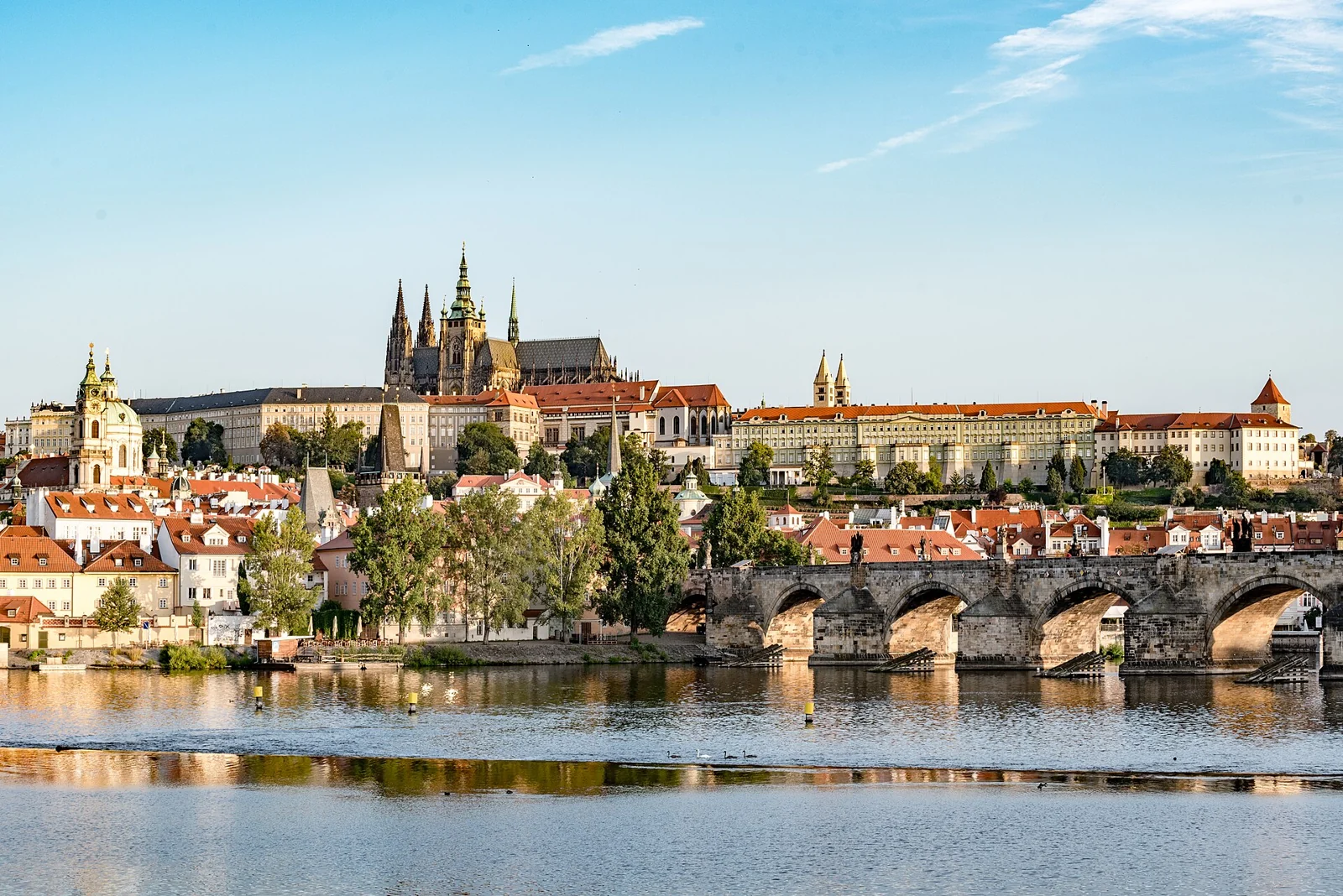
Tilman 2007 · CC BY-SA 4.0
Documents: the diploma and what was studied
The government portal lists the diploma, a supplement or equivalent record of study content, and evidence of a name change where relevant. Authentication, translation and electronic delivery need separate checking. A photograph is not automatically an authenticated electronic copy. Read the receiving university’s instructions and record which document is needed, who issues it and how it must be delivered.[2]
Do not focus only on the diploma’s cover when programme content is in the supplement. Check completeness, readable seals and names against current documents. If a supplement is missing, ask the issuing institution how to obtain it. Preparing original records may take time independently of processing a submitted application; keep these stages separate in your calendar.
Admission assessment may have a limited scope
Charles University distinguishes general recognition from assessment for its admissions process. Its Faculty of Humanities specifically limits faculty assessment to one admission procedure at one faculty. This matters when applying to several places. Do not assume one faculty’s result is automatically accepted elsewhere; ask each admissions office which evidence it accepts.[3] [4]
Plan professional access and relocation separately
For a regulated profession, clarify requirements with its authority before promising an employer a start date. Language, practical and other conditions depend on the profession and your route; academic recognition alone does not settle them. A diploma also does not replace residence or work rights. Separate these tasks so success in one is not mistaken for completion of all.
Tie housing to the confirmed study or work location and a realistic calendar, not just an expected document date. For a temporary stay, compare cancellation and extension terms. Assess a permanent home against daily travel and family needs. Clear recognition purposes, responsible authorities and remaining steps make Czech housing decisions less dependent on assumptions.
For example, an applicant obtains a faculty’s confirmation for admission and later discusses a job subject to special professional requirements. The first letter cannot simply be renamed a professional authorisation. Show the employer exactly what has been obtained and ask what remains necessary. This illustrates the checking logic, not a universal employment checklist; duties and the competent authority must be identified for the particular profession.
Sources and periods of data
- MŠMT — academic recognition of foreign higher education Accessed: 2026-11-18
- Gov.cz — recognition by a public higher education institution Accessed: 2026-11-18
- Charles University — diploma-recognition routes Accessed: 2026-11-18
- Charles University Faculty of Humanities — limits of admission recognition Accessed: 2026-11-18
