 Русский
 English
 Español


MAVATO / Bulgaria
A property shortlist in Bulgaria
Leave your phone number. We will discuss your plans and prepare a personal shortlist.
 Sign in / Register
Original published Mavato text. Migrated on 07.11.2026; terms must be checked at the time of enquiry.
More than a place on the map.
From the first interest in the country,
before choosing a place to live.
Population, dynamics of economy and consumer prices. Indicators refer to specified years; these are statistics of a country or territory, not an estimate of property returns.
Analytics by directionA seasonal guide for the Sofia area. Average monthly temperatures and precipitation from NASA POWER.
Average precipitation: 1.6 mm/day.
Average precipitation: 1.9…2.6 mm/day.
Average precipitation: 1.9…2.8 mm/day.
Average precipitation: 1.4…1.8 mm/day.
Ranges of average monthly values for 2001-2025 years: temperature takes into account day and night, precipitation is indicated in mm / day. This is a climate benchmark for a city area, not a forecast or an indicator for the whole country. The NASA POWER data is averaged over a cell around 0,5° × 0,625°; mountains, coasts and other areas may differ.
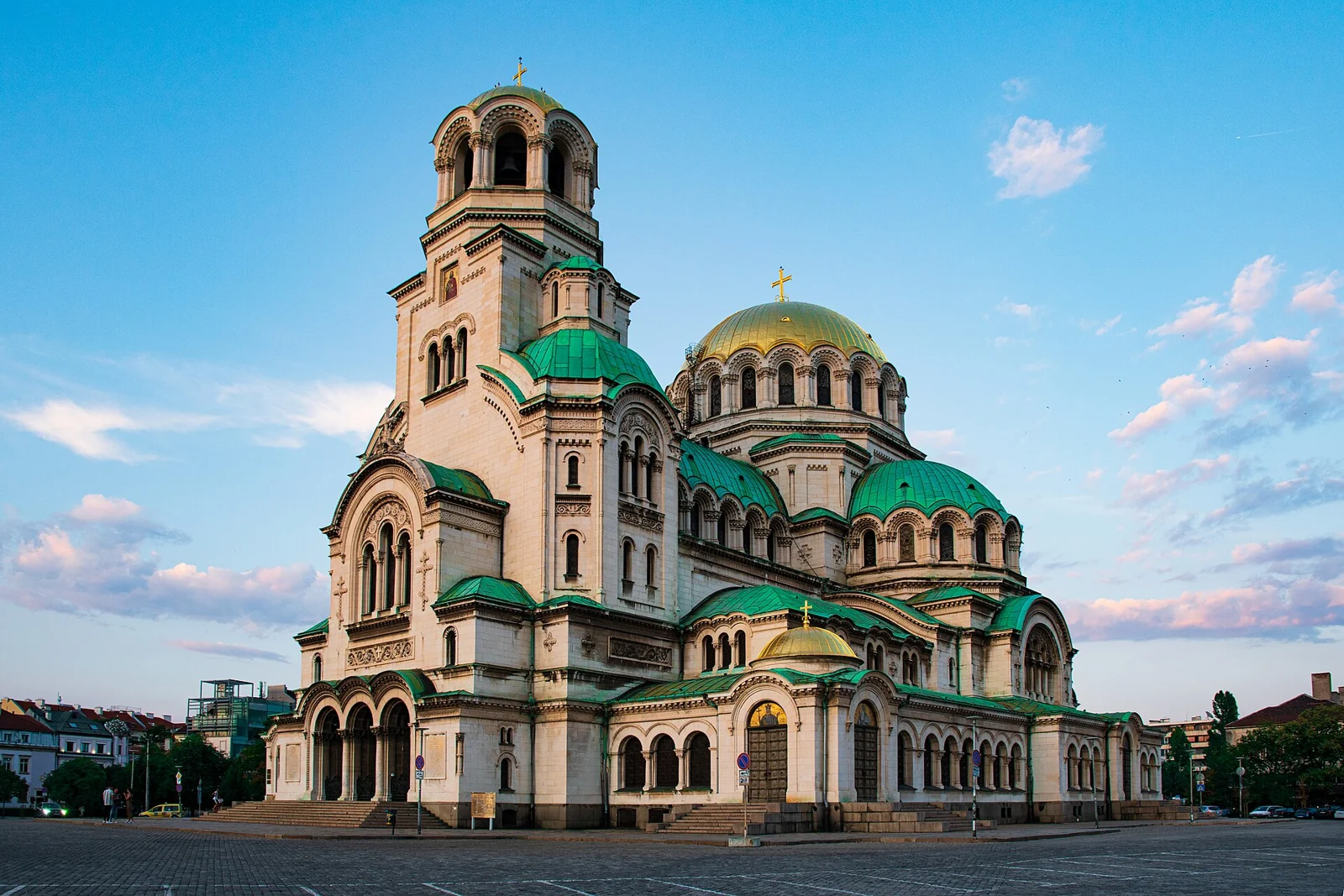
Several cultural and natural sites from the UNESCO World Heritage List. The links open the official description of each place.
Articles on the topicUNESCO World Heritage Centre / UNESCO DataHub · CC BY-SA 4.0 · Dataset
Leave your phone number. We will discuss your plans and prepare a personal shortlist.
Moving to Bulgaria It has been very attractive for Russian-speaking citizens for decades. And this year, due to the geopolitical situation, people who work online, young families, students, pensioners and other categories of citizens are increasingly considering this country for relocation.
People who want to immigrate to Bulgaria will enjoy a flexible tax system with very competitive rates compared to other European countries, as well as excellent employment and business opportunities. In other words, this small Southeastern European country has become a great destination for most foreign nationals interested in exploring new investment opportunities. Below, we will briefly try to describe all the basic steps you need to take when moving here.
With 1878, immigration to Bulgaria began in full force. The first wave of immigrants was from Central and Eastern Europe and created the modern Bulgarian state. Later, among the immigrants were Armenian refugees, Russian and foreign students of different nationalities. The country’s entry into the European Union into 2007 has not led to an increase in immigration, but the number of refugees from Afghanistan, Iran, Armenia and other countries is steadily growing. In the last decade, the number of private enterprises created by citizens of Russia, Ukraine, Turkey and the Middle East has increased.
Russian citizens interested in obtaining a residence permit in Bulgaria must apply for a long-term D visa at the Embassy or Consulate General of Bulgaria in Russia. To establish a foreign company in Bulgaria, the applicant must open a sales office. In the process of registering a trade representative office in Bulgaria, you can apply for a long-term D visa and a residence permit in Bulgaria.
If you are granted a temporary residence permit, you will be provided with a Bulgarian identity card that allows multiple entry and stay in Bulgaria; all holders of a residence permit can legally stay in Romania, Croatia and Cyprus for 90 days from any 180-day period without a visa. If you have a temporary residence permit and you renew it for five years, you can apply for a permanent residence permit in Bulgaria.
There are several permitted grounds for applying for a residence permit in Bulgaria for immigrants from Russia:
Many people leave a lot of positive feedback on the forums, you can check it out for yourself. I like the friendly attitude of the local population, delicious food, pleasant climate, variety of natural landscape. You can warm up on the coast, and snowboard in the winter in the ski resorts.
Let’s share with you some great reviews of real people who moved to Bulgaria and are happy:
I have lived in Bulgaria for over 5 years. I will write here briefly, but if there are any questions, I will be happy to answer.
I would like to point out that tourism should not be confused with emigration. Bulgaria is a tourist and Bulgaria is a real country. But let me be frank: the real Bulgaria is much better than it may seem to vacationers in the resorts.
The conditions for relocation are different for citizens of the European Union and for citizens of countries that are not part of the European Union.
If you are an EU citizen, you have nothing to worry about if you want to move to Bulgaria. In fact, when you enter the country, you need to obtain a residence permit if you are going to stay here. However, if you plan to stay in the country for less than 3 months (during which you can decide whether your lifestyle and lifestyle is right for you), you do not need to apply for any visa.
If you are not an EU citizen and wish to move to Bulgaria, you can apply directly from your home country for one of the following residence permits:
Student visas are also available for non-EU nationals who wish to immigrate to Bulgaria, but are issued for the duration of their studies.
Of course, an investor visa, which can lead to Bulgarian citizenship, is often the choice of most non-EU citizens, as it was created for those who are willing to invest and have the financial capacity to make a significant contribution to the country’s economy.
Foreign entrepreneurs who are able to make a minimum investment in Bulgaria can obtain a permanent residence permit and eventually acquire citizenship. There are several ways in which this option is possible, and the key is the type of investment, real estate, or anything else that an entrepreneur is willing to make.
Understanding investment law is a key step towards applying for citizenship by investment. Moreover, a foreign entrepreneur who wants to access this option will not only have to make the investment in accordance with the instructions, but also comply with other requirements for submitting the relevant documents for obtaining a residence permit. Over time, those who have resided in Bulgaria for a minimum number of years can apply for citizenship.
Citizens of non-EU countries who have already settled in other EU countries can move to Bulgaria on the basis of residence cards obtained in their respective countries.
If you want to immigrate to Bulgaria as a citizen from a non-EU country, a Blue Card may be a good option if you meet the following requirements:
Choosing this country for permanent residence, you will always be able to choose the right facilities and learn information about all popular destinations.
Browse destinations and property listings in the Mavato catalogue.
View propertiesExplore properties for your budget and investment horizon. Discuss potential returns, costs and exit options.
Tell us about your question or plans.

After submitting the form, you will see confirmation that your request has been received.