 Русский
 English
 Español



MAVATO / Bulgaria
A property shortlist in Bulgaria
Leave your phone number. We will discuss your plans and prepare a personal shortlist.
 Sign in / Register
Original published Mavato text. Migrated on 07.11.2026; terms must be checked at the time of enquiry.
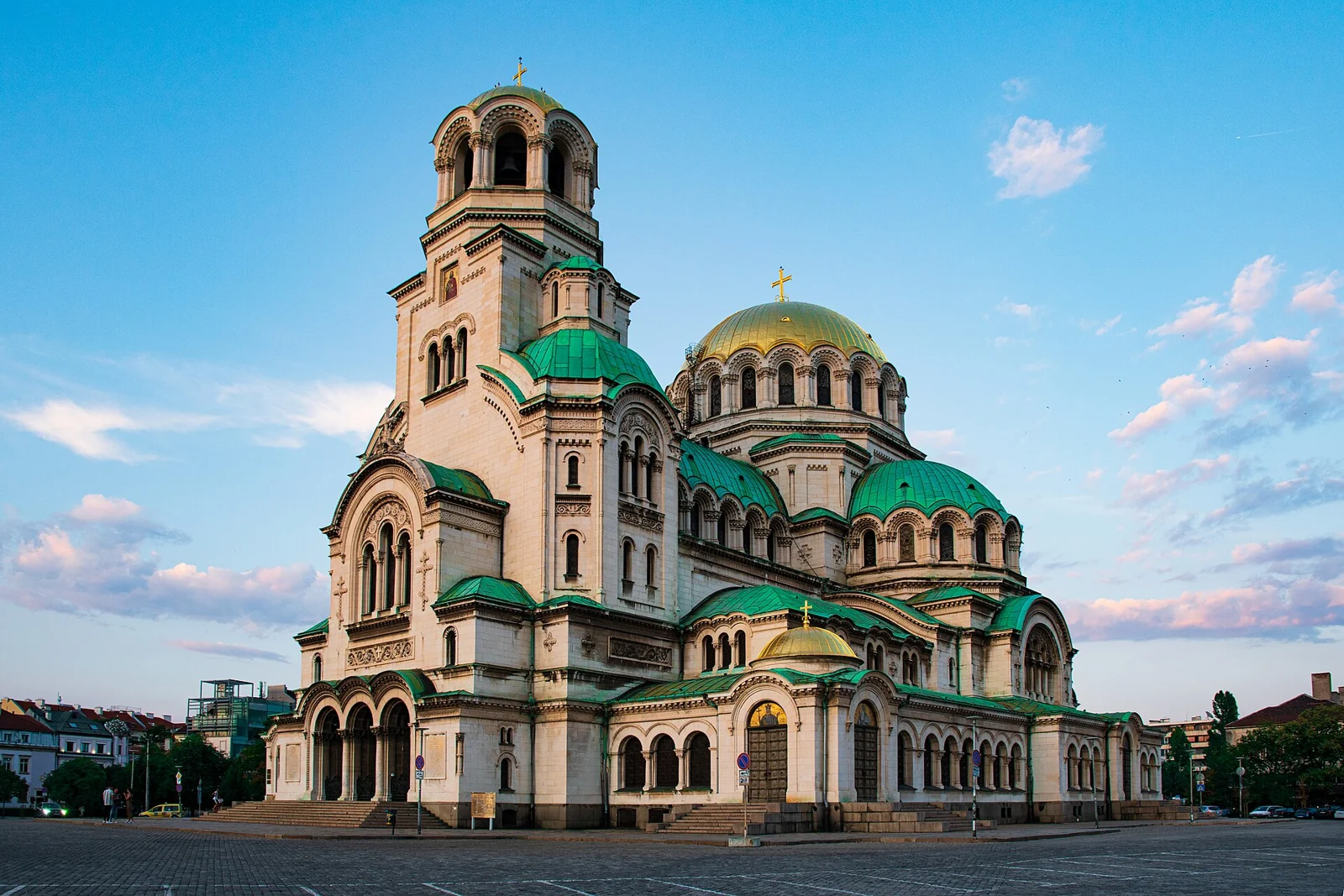
More than a place on the map.
From the first interest in the country,
before choosing a place to live.
Population, dynamics of economy and consumer prices. Indicators refer to specified years; these are statistics of a country or territory, not an estimate of property returns.
Analytics by directionA seasonal guide for the Sofia area. Average monthly temperatures and precipitation from NASA POWER.
Average precipitation: 1.6 mm/day.
Average precipitation: 1.9…2.6 mm/day.
Average precipitation: 1.9…2.8 mm/day.
Average precipitation: 1.4…1.8 mm/day.
Ranges of average monthly values for 2001-2025 years: temperature takes into account day and night, precipitation is indicated in mm / day. This is a climate benchmark for a city area, not a forecast or an indicator for the whole country. The NASA POWER data is averaged over a cell around 0,5° × 0,625°; mountains, coasts and other areas may differ.
Several cultural and natural sites from the UNESCO World Heritage List. The links open the official description of each place.
Articles on the topicUNESCO World Heritage Centre / UNESCO DataHub · CC BY-SA 4.0 · Dataset
Leave your phone number. We will discuss your plans and prepare a personal shortlist.
Due to its low cost of living, picturesque nature and proximity to the rest of Europe, Bulgaria is becoming increasingly popular among expats.
While the country is known to have reasonably well-trained and trained health workers, health facilities often suffer from low standards due to a lack of infrastructure and funding. However, there are many private clinics, offices, as many practitioners are attracted to more lucrative conditions and opportunities in the private sector.
For workers in Bulgaria, including foreign residents, contributions to the national health insurance fund of the country are mandatory.
Medical staff in major cities speak English more often, but in rural Bulgaria this is a rare occurrence.
Before you travel to another country, make sure you have quality and proven health insurance that you can rely on. Many international health insurance plans, such as AXA, Allianze, offer comprehensive health insurance when you are abroad.
The public health system in Bulgaria is known for significant disadvantages, such as poor equipment, inadequate equipment, shortage of personnel and lack of funding. Most expats tend to choose more efficient, reliable, and progressive private health centers.
EU and EEA residents will be happy to know that their European Health Insurance Card (EHIC) is valid in Bulgaria, meaning that its holders are eligible for free treatment in public hospitals that have a contract with the Bulgarian National Health Insurance Fund (NHIF). A digital map that stores information about each person is available in the mobile application.
Foreigners must pay mandatory contributions to the Bulgarian public health system in order to benefit from it. To make these contributions, expats will need to register with the NHIF and choose a GP and dentist.
Most doctors in the public sector are contracted by the NHIF. Expats will be charged a small fee for outpatient consultation, but inpatient treatment is free. However, the vast majority of dentists are not covered by the NHIF, meaning expats often have to pay the full amount for dental treatment.
You will be surprised that the so-called family doctor examines all family members. In Bulgaria, clinical examinations are not common, children are not examined by a pediatric lore, an ophthalmologist cardiologist. Only in emergency cases, the family doctor can refer to a narrow specialist.
Private clinics in Bulgaria are much more developed and better equipped than their counterparts in the public sector. Since the private healthcare system in Bulgaria is quite cheap compared to many neighboring countries, the country is very popular destination for medical tourism. Cosmetic and dental procedures are particularly popular. Most doctors in private institutions also speak two languages, so communicating in English will not be a problem.
Pharmacies in Bulgaria are regulated and managed by qualified pharmacists. As a rule, they are easy to find in city centers, hospitals also often have pharmacies. In some major cities of the country there are round-the-clock pharmacies. However, most of them work up to 19 hours maximum, and on weekends are closed altogether.
The rules for issuing medical prescriptions in Bulgaria can be slightly more stringent than in the home country of an expat. For example, buying antibiotics without a prescription is not realistic.
It is worth paying attention to the generic names of any chronic or prescription drugs, as brand names tend to vary from country to country.
Under the NHIF, emergency care in life-threatening situations is provided free of charge and emergency departments are required to treat each patient. If the situation is not life-threatening, expats will have to pay for ambulance services and treatment. Emergency response times in Bulgaria still leave much to be desired, and depending on the region, it is better to get to the medical facility by your own transport or taxi in case of an emergency. 112 is a pan-European emergency number, whose operators speak English and can help with calling an ambulance.
help or refer them to the nearest hospital in case of emergency.
Although the country lags behind the rest of Europe in areas such as transport, the economy, the health care system is not covered. Arriving here for private treatment, you will save significantly on your treatment, and the cost of living will also be lower. One good piece of advice is to stick to more developed resorts geared towards foreign guests. All the doctors there speak English. Bulgarian is very difficult for our compatriots to understand.
Another key part of medical tourism in Bulgaria is cosmetology. Plastic surgery and cosmetic procedures are not usually performed in public hospitals or clinics in Bulgaria. There is a wide network of private clinics that offer many high-quality treatments. As a result of the rapid growth in popularity of cosmetic procedures in Eastern Europe, the standards of these procedures are really high in Bulgaria.
What really attracts patients to Bulgaria is not only high-quality service, but also extremely low prices for procedures compared to Western Europe and Russia. In Bulgaria, they are about several times lower than the cost of the same in Western countries.
It is common knowledge that lower prices mean worse quality. Bulgarian dentistry is evidence that this claim can be refuted. As many as 40 percent of all medical tourists coming to Bulgaria come to the country from neighboring countries and for dental treatment.
There are thousands of different clinics throughout the country where you can undergo all the necessary procedures. Prices for standard procedures such as cleaning, caries treatment, are disproportionately low, totaling 30-40 euros; while exactly the same procedures can cost 100 euros in western parts of Europe and in Russia. However, a huge difference in price does not mean a difference in quality. Bulgarian dentistry is known for keeping up with modern technologies and methods.
Browse destinations and property listings in the Mavato catalogue.
View propertiesExplore properties for your budget and investment horizon. Discuss potential returns, costs and exit options.
Tell us about your question or plans.

After submitting the form, you will see confirmation that your request has been received.