 Русский
 English
 Español



MAVATO / Bulgaria
A property shortlist in Bulgaria
Leave your phone number. We will discuss your plans and prepare a personal shortlist.
 Sign in / Register
Original published Mavato text. Migrated on 07.11.2026; terms must be checked at the time of enquiry.
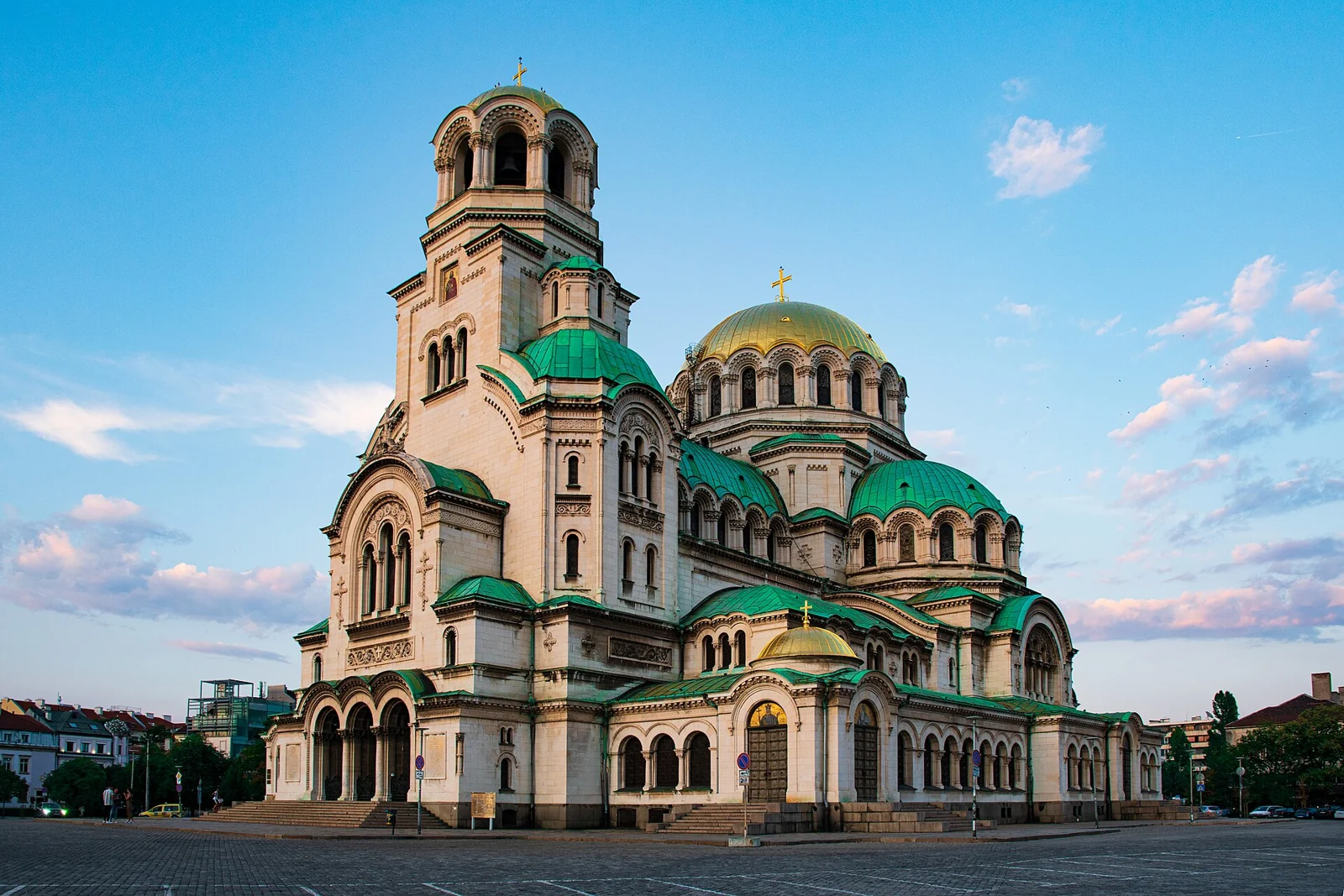
More than a place on the map.
From the first interest in the country,
before choosing a place to live.
Population, dynamics of economy and consumer prices. Indicators refer to specified years; these are statistics of a country or territory, not an estimate of property returns.
Analytics by directionA seasonal guide for the Sofia area. Average monthly temperatures and precipitation from NASA POWER.
Average precipitation: 1.6 mm/day.
Average precipitation: 1.9…2.6 mm/day.
Average precipitation: 1.9…2.8 mm/day.
Average precipitation: 1.4…1.8 mm/day.
Ranges of average monthly values for 2001-2025 years: temperature takes into account day and night, precipitation is indicated in mm / day. This is a climate benchmark for a city area, not a forecast or an indicator for the whole country. The NASA POWER data is averaged over a cell around 0,5° × 0,625°; mountains, coasts and other areas may differ.
Several cultural and natural sites from the UNESCO World Heritage List. The links open the official description of each place.
Articles on the topicUNESCO World Heritage Centre / UNESCO DataHub · CC BY-SA 4.0 · Dataset
Leave your phone number. We will discuss your plans and prepare a personal shortlist.
Expats moving to Bulgaria often want to escape the hustle and bustle they are used to living in their home country. Taking advantage of the fact that in the Bulgarian real estate market you can find an excellent value for money, they find that the real estate market is very competitive. Bulgaria This is a pearl that is still undervalued.
Magnificent delicious cuisine, friendly and charming people, fascinating history and rich culture, all this awaits you in Bulgaria. This country boasts a variety of natural landscapes, from golden beaches to lush green mountains.
As an expat in Bulgaria, you can enjoy a really high quality of life while saving money as the cost of living is very low – the lowest in Europe.
Living in Bulgaria on 52% is cheaper than, for example, in the UK.
Let's take an example. You will need around 2978 pounds in Manchester to maintain the same standard of living you can have with 1500 pounds (3165 leva) in Varna.
Property prices in Bulgaria are also much lower than in any other European country. At the same time, the initial investment in the arrangement is minimal. The Bulgarian real estate market offers fantastic real estate prices, especially on the coast. The cost of modern apartments by the beach can range from 30 000 to 90 000 euro, and the cost of hilltop villas with sea views in Balchik can start from 70 000 euro.
Country real estate, less than an hour from the beach can be bought very cheaply. Homes with cosmetic defects can be purchased for as little as 15 000 Euro, and fully furnished renovated properties can cost around 35 000 Euro.
Life in Bulgaria is very safe, contrary to the media. Statistical global safety ratings usually place Bulgaria in the 20 percentile.Despite pickpockets, which can be in busy areas and on public transport, the crime rate is extremely low.
In the Global Peace Index for 2021, Bulgaria ranks 26-e in the world, far ahead of countries such as Spain, Greece and France. The UK is ranked 45 alongside Laos.
Although the definition of “cheap” and “high quality of life” may vary, in most cases, a good and comfortable life is synonymous with high cost. However, everything from food and drink to groceries and haircuts will cost you less than anywhere else. Lively beach and ski resorts, water parks and golf courses are also within easy reach.
Offering life in a safe European country with a traditional society built on an authentic, deeply rooted culture, Bulgaria is sure to captivate you with its charm, friendliness, natural beauty.
It is important to note that if you need to contact emergency services in Bulgaria, you should call the 112 number.
Most major cities in Bulgaria have a significant expat community and this number will increase as more and more people consider moving and adopting the country as their new home. Therefore, it will not be difficult to find like-minded people.
The National Health Service is accessible to all residents of Bulgaria (including foreigners) and is managed by regional health centres. The doctors and nurses who work in the local health care system are very well trained and provide top-notch care, despite the limited facilities and infrastructure they have at their disposal.
Everyone who works in Bulgaria, including foreigners, must pay health insurance premiums and can register with a doctor of their choice, so most people choose a doctor near their home or one who speaks their native language. In Bulgaria, doctors diagnose and treat where they can before referring patients to other institutions or specialists within the system.
Bulgaria’s private healthcare system often employs doctors from the public sector, and private clinics and hospitals offer a more modern and enjoyable environment. Private medical fees are expensive compared to the cost of public health contributions, but noticeably cheaper than fees in other countries.
All types of transport infrastructure, including air, rail, road and water, are well developed, making it easier to live in Bulgaria and move around the country.
If you decide to drive, you can use your local driving license along with your international driving license for up to one year. After that, you will need to obtain a local license.
Expats in Bulgaria should remember that driving is right-handed, overtaking from the left is prohibited, and you can not turn right at a red light.
Bulgarian roads are generally in poor condition and the lanes do not always have markings. Locals can drive a little randomly, at high speeds and without specifying the lane.
The road network consists of restricted motorways, first-class roads, second-class roads and third-class roads. Bus transport is widely available, with express buses serving most of the country's major cities.
Rail transport in Bulgaria is easily accessible and quite convenient. The railway network serves all major settlements in Bulgaria. Narrower railways have been designed to reach less accessible locations and serve destinations with fewer passengers. Tickets can be purchased at railway stations, transport offices of cities and travel agencies. On GBrazpisanie.com you can find more information about bus and rail routes.
Browse destinations and property listings in the Mavato catalogue.
View propertiesExplore properties for your budget and investment horizon. Discuss potential returns, costs and exit options.
Tell us about your question or plans.

After submitting the form, you will see confirmation that your request has been received.