
 Русский
 English
 Español
Turks and Caicos Islands: economy, climate and choosing a location
Dated indicators, a climate calendar for Grand Turk and questions to help you choose a location in the Turks and Caicos Islands. Data limitations, seasons and useful reference points before viewing homes.
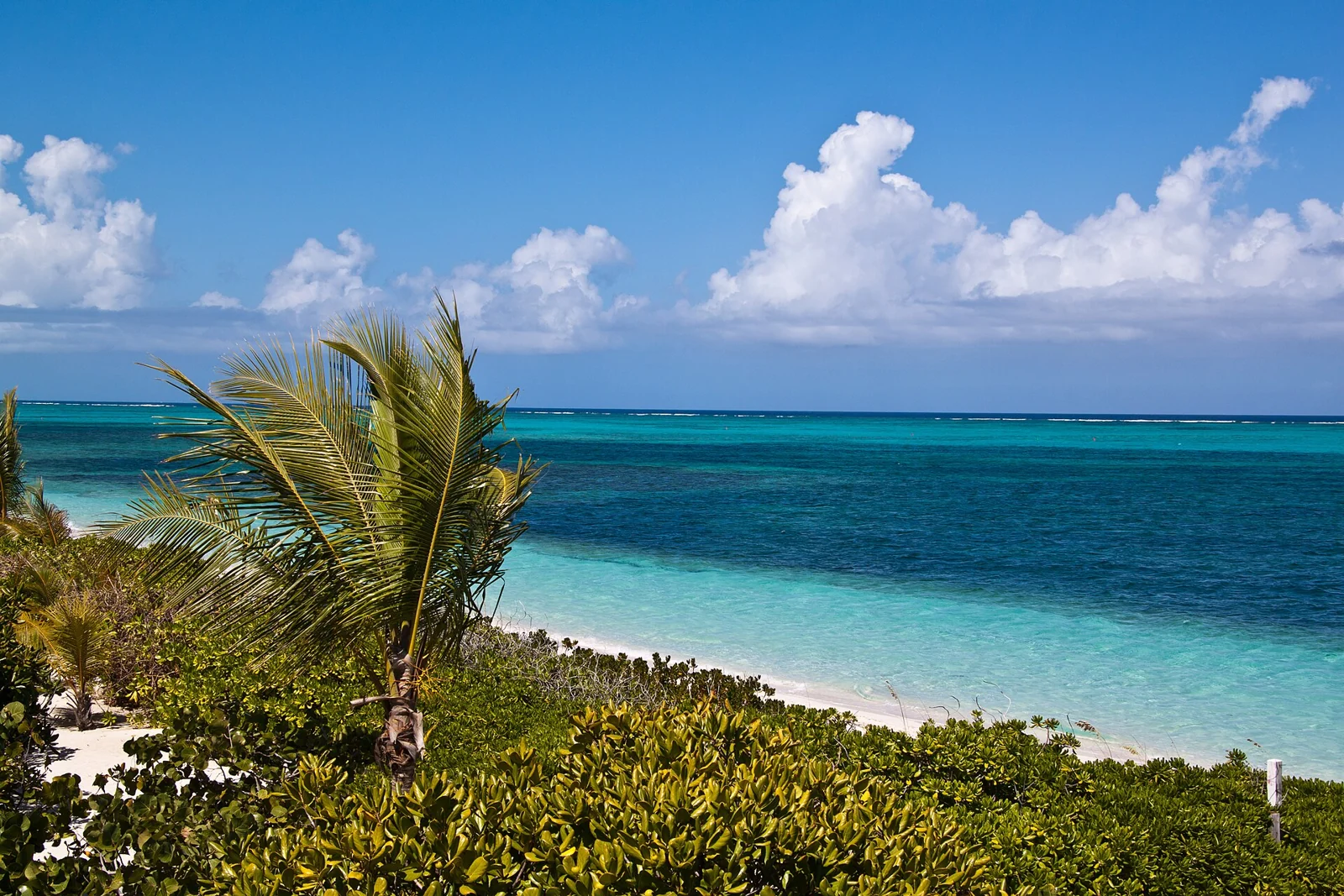
Turks and Caicos Islands
More than a place on the map.
From the first interest in the country,
before choosing a place to live.
Population and economy
Population, dynamics of economy and consumer prices. Indicators refer to specified years; these are statistics of a country or territory, not an estimate of property returns.
Analytics by directionSources
- World Bank: Population (2025) 2026-11-09
- World Bank: Growth in Real GDP (2024) 2026-11-09
- World Bank: GDP per capita (2024) 2026-11-09
Climate · Grand Turk
Landmark by seasons for the area of Grand Turk. Average monthly temperatures and precipitation according to NASA POWER.

Winter
December to February ≈ +25…+26 °C Hot · low rainfallAverage precipitation: 0.8…1.2 mm/day.

Spring
March-May ≈ +25…+26 °C Hot · moderate rainfallAverage precipitation: 0.9…2.1 mm/day.
Summer
June-August ≈ +28 °C Hot · moderate rainfallAverage precipitation: 1.2…1.7 mm/day.
Autumn
September to November ≈ +27…+28 °C Hot · moderate rainfallAverage precipitation: 2.2…2.6 mm/day.
Ranges of average monthly values for 2001-2025 years: temperature takes into account day and night, precipitation is indicated in mm / day. This is a climate benchmark for a city area, not a forecast or an indicator for the whole country. Season names are conditional: these are calendar groups of months, not the boundaries of the dry or rainy season. The NASA POWER data is averaged over a cell around 0,5° × 0,625°; mountains, coasts and other areas may differ.
Sources
Geography and places
Geographical reference points for acquaintance with the direction.
Articles on the topicSources
- Geographical point: Grand Turk 2026-11-09
- World Bank: information on the direction 2026-11-09
- World Bank: land area (2024) 2026-11-09
A property shortlist in the Turks and Caicos Islands
Leave your phone number. We will discuss your plans and prepare a personal shortlist.
To choose accommodation in Turks and Caicos, it is useful to distinguish national conditions from those at a specific address. In this review, we have dated statistics, a climate reference point for the city of Grand Turk. This information helps you prepare questions for a trip and property viewings; property prices and expected returns are not calculated here.
Country overview and reference location
In the regional classification of the World Bank, the country belongs to the Latin America and the Caribbean group. The city of Grand Turk is chosen for the climate section; it is a geographical landmark, not a description of each district of the country.[1] [7]
Population: 46 855 people in 2025. The number of residents determines the scale of the destination, but does not indicate the number of buyers or tenants in the area of interest.[2]
Land area: 948 km²; source reference year: 2024. When choosing a location, compare the exact address with your daily routes: the size of a country does not tell you how long a journey will take.[5]
Economic indicators and their limitations
Reference periods are listed separately: figures from different years do not form a single current snapshot.
| Indicator | Value | Year |
|---|---|---|
| Growth in real GDP | 5.6 % | 2024 |
| GDP per capita | 37 507 USD | 2024 |
Change in real GDP for 2024 - 5.6 %: the indicator describes the growth of the economy taking into account price changes. It does not measure the growth of the value of the apartment, nor the income from its rent. For an investment model, a separate set of data on the selected market is needed.[3]
GDP per capita - 37 507 USD for 2024, in current US dollars. This is a statistical measure of output per person; it is not equal to the average salary, family income, or budget of a local tenant.[4]
In the set used is not confirmed: inflation. The missing figures are not replaced by zeros or values of a neighbouring country.
Climate Calendar: Grand Turk
The NASA POWER calculation uses the 2001-2025 period. The table shows the average monthly air temperatures at an altitude of 2 m and the average daily precipitation. Temperature takes into account day and night; it is not the daily maximum, not the perceived temperature, and not the forecast for the nearest trip.[6] [8]
Climate point: Grand Turk. Average values for 2001-2025; rounding of temperature to 0.1°C, precipitation to 0.01 mm / day.
| Month | Average temperature | Precipitation, mm/day |
|---|---|---|
| January | +25.1 °C | 1.01 |
| February | +24.9 °C | 0.79 |
| March | +24.8 °C | 0.86 |
| April | +25.4 °C | 0.92 |
| May | +26.4 °C | 2.09 |
| June | +27.6 °C | 1.47 |
| July | +28.1 °C | 1.23 |
| August | +28.5 °C | 1.68 |
| September | +28.5 °C | 2.48 |
| October | +28.1 °C | 2.65 |
| November | +27 °C | 2.18 |
| December | +26.1 °C | 1.17 |
The highest average monthly temperature in this row: September - +28.5°C. Lowest: March - +24.8°C. The difference between them is about 3.7°C. This is the range of average months, not possible absolute extremes.[6]
The highest average daily precipitation: October - 2.65 mm / day; the smallest: February - 0.79 mm / day. Precipitation can fall unevenly: these values do not mean that it rains every day, nor do they indicate the number of rainy days.[6]
Ranges of average monthly values for 2001-2025: temperature takes into account day and night, precipitation is indicated in mm / day. This is a climate benchmark for a city area, not a forecast or an indicator for the whole country. Season names are conditional: these are calendar groups of months, not the boundaries of the dry or rainy season. The NASA POWER data is averaged over a cell around 0.5° × 0.625°; mountains, coasts and other areas may differ.[6] [8]
Tim Sackton · CC BY-SA 2.0
How to use seasonality when choosing a home
- For Grand Turk, the warmest average month is September (+28.5°C). For this period, it is useful to check the shading, ventilation and cooling. Evaluate these characteristics for a particular apartment, including the floor and orientation of the windows.[6]
- Precipitation at the Grand Turk point varies from 0.79 to 2.65 mm/day in average months. For the trip, compare the selected dates with this table, and for the purchase separately check the roof, water supply and local conditions: the climatic series does not replace the survey of the building.[6]
- In the available data, real GDP growth 5.6 % refers to 2024. Before estimating a lease, you need to get closer to the transaction information about demand and costs in the selected area; the national dynamics can not be taken as the profitability of the object.[3]
These conclusions are a practical interpretation of the given data. They help prepare questions, but do not confirm the quality of a particular home, the legality of the lease or the expected profit. For a country, mountain, island or coastal object, the climatic point should be chosen closer to the address.
What to check when visiting the place
The sample used for Turks and Caicos does not include World Heritage Sites. This does not mean that there are no interesting places. To select an area, first make your own itinerary: food, medicine, transportation, work or school and vacation spots; then check the actual travel time from the address.
From a country overview to a specific property
Compare the area and terms of residence with the climate reference of Grand Turk, then collect data on the property itself: law, condition, regular expenses and usage restrictions. At the stage of strategy selection, it is useful to consider separately the purchase for living, seasonal trips and renting – they have different accessibility and management requirements.
You can continue in property catalogue: Turks and Caicos and forward. The exact terms of purchase, taxes and migration itinerary are checked separately for citizenship, buyer status and specific jurisdiction.
Sources and periods of data
- World Bank: information on the direction Accessed: 2026-11-09
- World Bank: Population (2025) Data period: 2025 · Accessed: 2026-11-09
- World Bank: Growth in Real GDP (2024) Data period: 2024 · Accessed: 2026-11-09
- World Bank: GDP per capita (2024) Data period: 2024 · Accessed: 2026-11-09
- World Bank: land area (2024) Data period: 2024 · Accessed: 2026-11-09
- NASA POWER: Grand Turk, climate data 2001-2025 Data period: 2001–2025 · Accessed: 2026-11-09
- World Bank Country API: Grand Turk city coordinates Accessed: 2026-11-09
- NASA POWER: sources and resolution of climate data Accessed: 2026-11-09
